Last updated October 30, 2026
 Wrought iron
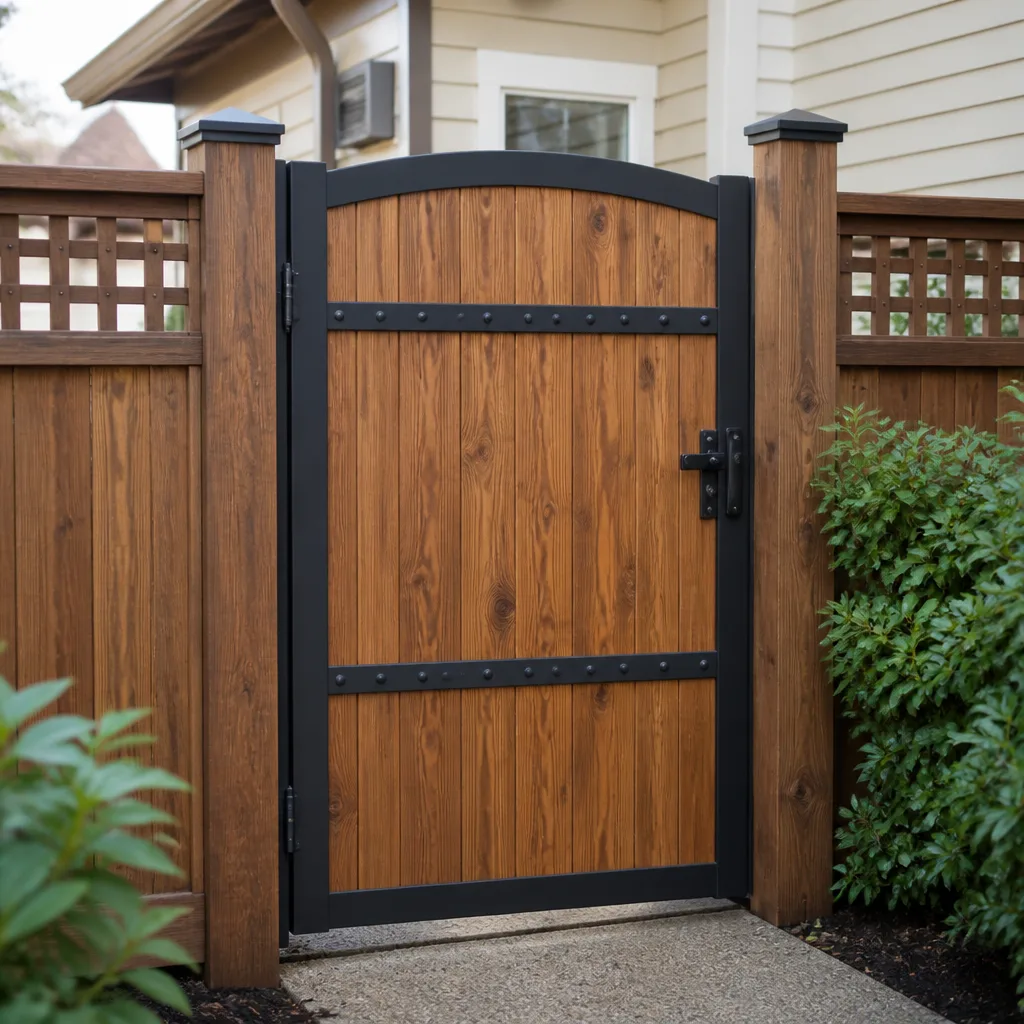 Wood & steel frame
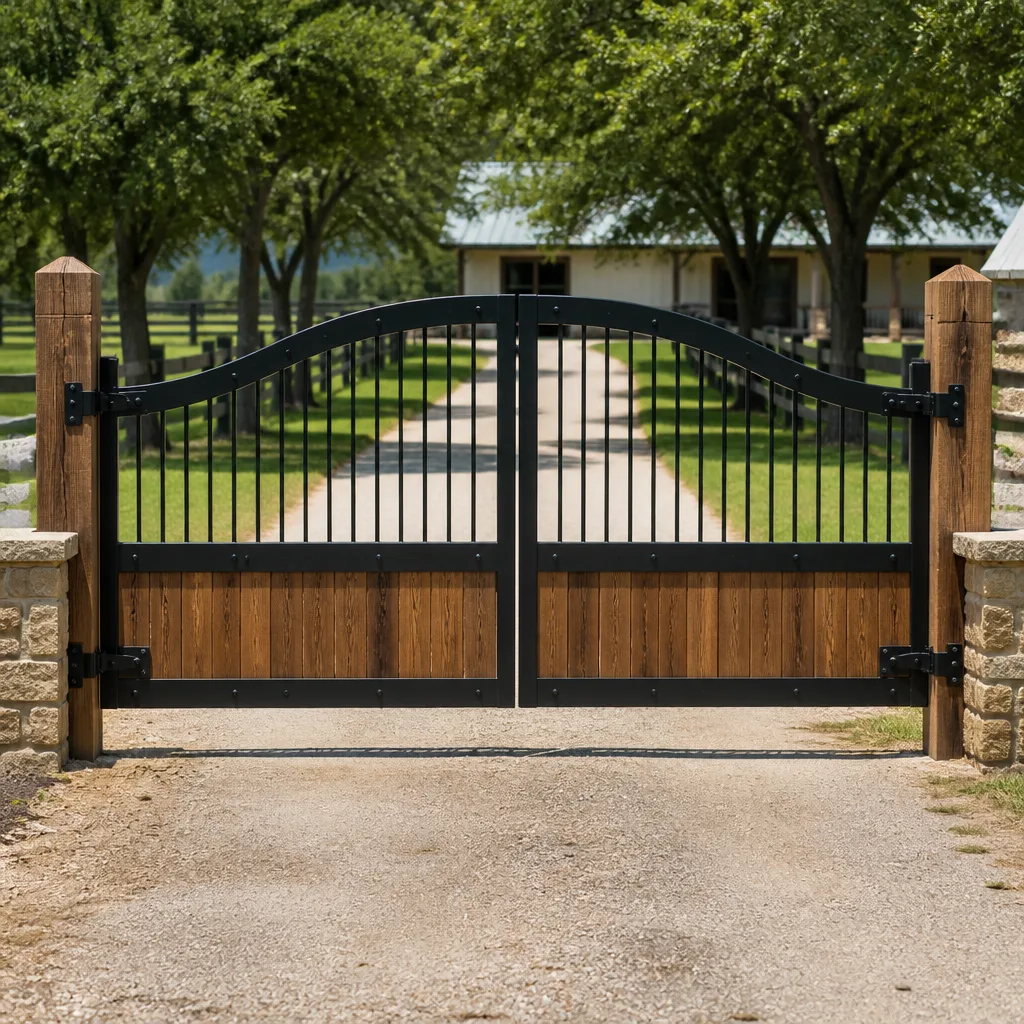 Farm & ranch
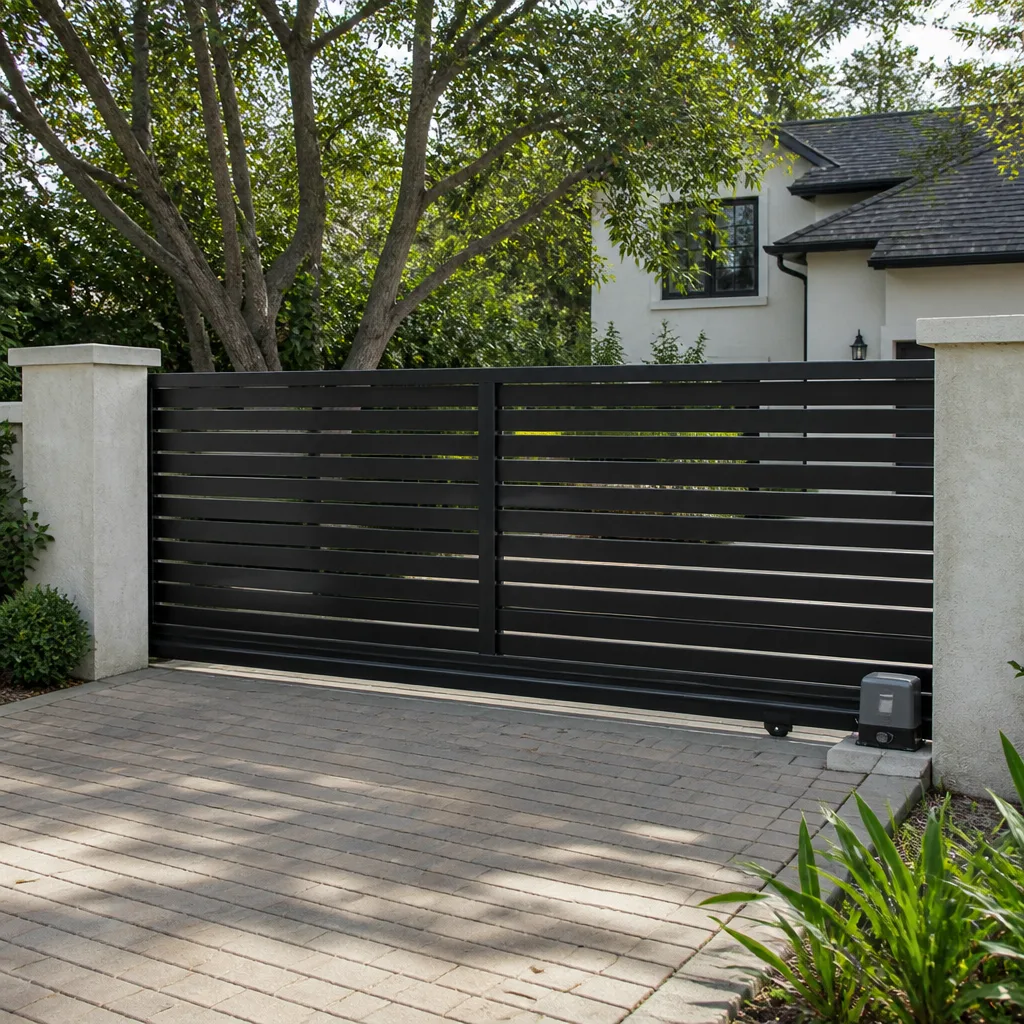 Sliding driveway gates
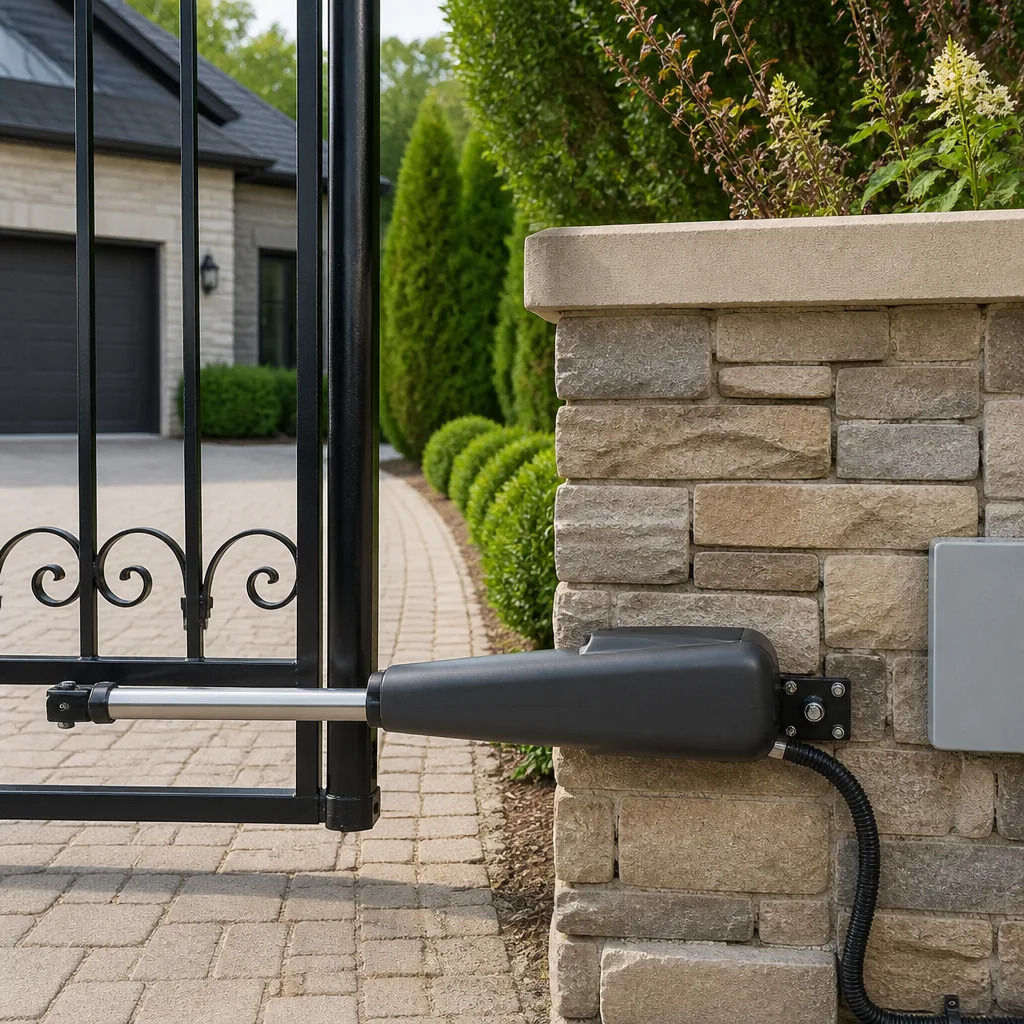 LiftMaster operators
Free on-site gate assessment - hinges, posts, and your LiftMaster or Nice gate operator checked before anything is quoted
The assessment is free and the quote is the invoice.
Get your free estimateThe Complete Gate Repair Guide for Daytona Beach Homeowners
The average automated gate in Daytona Beach faces more salt-air corrosion stress in one humid summer than an inland gate faces in three years. Yet most gate repair guides read like they were written for a subdivision in Ohio. This one isn’t. You’ll learn exactly how coastal conditions degrade gate systems in a predictable sequence, what you can safely check yourself, which failures demand a specialist, and how to time maintenance around hurricane season and summer heat cycles so a $90 hinge doesn’t become a $900 operator replacement.
Quick Answer
Gate repair in Daytona Beach typically costs $145 to $400 for mechanical fixes like hinge and roller replacement, while electric gate repair involving control boards, loop detectors, or operator motors runs $350 to $1,200 depending on brand and damage extent. The coastal environment accelerates corrosion on hinges, wiring, and circuit boards in that order, so catching early-stage rust and moisture intrusion is the single most effective way to avoid major repair bills. Most mechanical repairs take 1 to 3 hours, while control board diagnostics and replacement may require a return visit if parts need ordering.
Styles & brands we work with
Table of Contents
- The Daytona Beach Corrosion Sequence: How Salt Air Kills Gates in Order
- How to Inspect Each Stage: Hinges, Wiring, Then the Board
- Which Gate Repairs Are DIY-Safe in Florida’s Heat
- Brand-by-Brand: How Nine Major Operators Hold Up in Coastal Conditions
- Volusia County Permits and HOA Gate Rules
- A Seasonal Maintenance Calendar Built for Daytona Beach Weather
- Electric Gate Repair: Control Boards, Sensors, and What Actually Fails
- When Repair Stops Making Sense: Full Gate Replacement
The Daytona Beach Corrosion Sequence: How Salt Air Kills Gates in Order
We’ve torn down enough gate systems in Daytona Beach to see a pattern that generic guides miss entirely. Coastal gate failures follow a predictable progression, and understanding it tells you where to look before you call anyone. Here’s the sequence we see on service calls from Ormond Beach down to Port Orange.
Stage one: hinges and rollers. Salt spray settles on exposed metal, and the first components to suffer are the ones bearing weight. Gate hinges, truck wheels, and roller tracks start showing rust within 12 to 18 months of installation near the coast. The gate still works, but it starts dragging. Homeowners compensate by adding a little more force to the operator, which puts strain on everything downstream.
Stage two: wiring and connectors. Once the gate’s physical movement becomes labored, the operator draws more current. Heat builds at every connection point. Salt-corrupted terminals and moisture-wicking wire insulation start causing intermittent faults. The gate opens but won’t close, or closes but won’t latch. This is where many Daytona Beach residents start thinking the operator is dying, when the actual problem is a corroded connector feeding it.
Stage three: the control board. The board is the last component to fail, not the first. By the time a control board gets replaced, it’s usually because stage one or stage two was ignored for months. Voltage irregularities from bad wiring, combined with Florida humidity inside the enclosure, eventually fry the board. The sequence matters because skipping the earlier stages is how a $90 hinge replacement becomes a $900 control board and operator replacement.
The practical takeaway: when a gate starts moving slower, making noise, or hesitating, the problem is almost always mechanical or connector-level first. That’s also the cheapest time to fix it.
How to Inspect Each Stage: Hinges, Wiring, Then the Board
You don’t need a multimeter to catch most gate problems before they cascade. A ten-minute walk-around once a month will surface the majority of issues we get called for in Daytona Beach. Here’s a simple inspection sequence that mirrors the corrosion pattern above.
- Look at the hinges and rollers first. Check for rust lines, powder that rubs off when you touch the metal, and any visible sag. Push gently on the gate at the latch end when it’s in the closed position. If there’s more than a quarter inch of play, the hinges are wearing.
- Run the gate and listen. A smooth operator is nearly silent. Grinding, clicking, or a labored hum under load means mechanical resistance somewhere. The motor is working harder than it should, and that shortens its life.
- Check the wiring you can see. Look for cracked insulation, green corrosion on terminals, and any wire that’s rubbing against the gate frame. In Daytona Beach, exposed connections near the ground corrode fastest because salt-laden moisture pools there.
- Open the operator enclosure. If it’s safe to do so without touching wires, look for moisture beads, rust on the board’s connections, and any burnt smell. A healthy enclosure should be dry inside. If it’s not, the seal has failed.
- Test the safety sensors. Block the gate’s path while it’s closing. It should reverse immediately. If it doesn’t, stop using the automated function and get it serviced. This is a safety issue, not a convenience issue.
This sequence catches problems in the same order they develop in Daytona Beach’s coastal environment, and it prevents the most expensive failure mode we see: a mechanical issue left unchecked long enough to damage the electronics.
Which Gate Repairs Are DIY-Safe in Florida’s Heat
Some gate maintenance is genuinely safe to handle yourself. Other repairs are dangerous or will void your operator’s warranty. Knowing the difference in Daytona Beach matters more than inland, because heat accelerates the consequences of doing things wrong. Electrical components that would simply fail inland can become fire or shock hazards in a Florida summer when they’re already heat-stressed.
Generally safe to do yourself:
- Lubricating hinges, rollers, and tracks with a marine-grade lubricant
- Tightening visible bolts on the gate frame and latch
- Clearing debris from the gate track and sensor lenses
- Adjusting the gate’s physical stop or latch position if it’s a simple mechanical catch
- Replacing a damaged rubber seal or weather strip on the gate edge
Leave to a specialist with brand-specific training:
- Any repair involving springs under tension. Gate springs store enormous energy, and a failed release can cause severe injury.
- Control board diagnosis and replacement. Boards are brand-specific, and a wrong connection can fry the new board in seconds.
- Loop detector installation or tuning. These require cutting into the driveway surface and adjusting sensitivity to motorcycle-versus-car detection. Getting it wrong means the gate won’t open for small vehicles.
- Operator motor replacement. The motor and gear assembly is matched to the gate’s weight and duty cycle. Swapping in a mismatched part voids warranties and shortens lifespan.
- Any repair that requires bypassing or disconnecting safety sensors. Sensors exist because gates have seriously injured people. Cutting them out of the circuit is never the fix.
If you’re not sure which category your repair falls into, take photos of the issue and the operator’s brand label before you call anyone. A gate specialist can often tell you over the phone whether it’s a simple fix or a service call.
Brand-by-Brand: How Nine Major Operators Hold Up in Coastal Conditions
We work on nine major gate operator brands, and they are not equal when it comes to surviving Daytona Beach’s salt air. Here’s a practical breakdown based on what we see in the field, from residential entry-level to commercial-grade equipment.
Mighty Mule and Ghost Controls are the most common residential operators in the Daytona Beach area, often installed as DIY systems. They’re affordable and easy to source, but their enclosures and boards are not built for heavy salt exposure. We replace corroded Mighty Mule boards more than any other residential brand. The hardware survives if it’s sprayed regularly with a corrosion inhibitor and the enclosure seal is kept intact.
Linear and Elite are mid-range residential and light commercial operators. They hold up better than the entry-level brands because their enclosures are tighter and their boards have better conformal coating. The weak point we see is the hinge and bracket hardware, which is often mild steel and rusts before the electronics do.
LiftMaster is a workhorse in residential communities around Volusia County, and its LA400 and LA500 series operators are common on HOA entrances. LiftMaster boards tolerate humidity well, but the accessory wiring connectors corrode faster than the board itself. The fix is usually a connector replacement rather than a full board swap.
FAAC, BFT, and DoorKing are the commercial-grade brands we service most often, and they’re built for heavier cycles and harsher conditions. FAAC hydraulic operators are particularly durable in coastal environments because the hydraulic fluid system is sealed against moisture. BFT boards are well-coated but sensitive to voltage irregularities from salt-damaged power connections. DoorKing’s slide gate operators are common on apartment complexes and commercial lots in Daytona Beach, and they fail most often at the limit switches and loop detector connections rather than the board itself.
Viking is another commercial brand we work on, primarily on vehicular slide gates for industrial and institutional properties. Their operators are heavy and built to last, but the wiring junction boxes are often the failure point in salt-heavy areas like Daytona Beach’s waterfront communities.
The brand matters when it comes to parts sourcing too. A universal board from a generic parts site won’t behave like a factory FAAC board, and we’ve replaced many “bargain” boards that lasted less than six months. When a repair requires a replacement part, getting the right brand-specific component is the difference between a six-year fix and a six-month fix.
Volusia County Permits and HOA Gate Rules
Daytona Beach homeowners considering gate repair or replacement need to understand two separate layers of rules: what the county requires, and what your HOA or community association requires. Ignoring either one can turn a simple gate project into a compliance headache.
Volusia County and City of Daytona Beach permits. Mechanical gate repair that doesn’t change the gate’s footprint, height, or operator type generally doesn’t require a permit in Volusia County. Replacing a hinge, swapping a board, or installing a new operator on an existing gate frame is typically repair work. However, a full gate replacement with new posts, a relocated gate track, or a changed gate height does require a building permit in most cases. Automatic gates that swing across a public sidewalk or right-of-way face additional review because of pedestrian safety requirements. If you’re replacing a gate that’s within a set distance of a public road, expect the county to want documentation that your safety sensors and barrier design meet current Florida Building Code requirements.
HOA and community association rules. Many Daytona Beach communities, particularly gated neighborhoods in the LPGA area and waterfront developments, have specific architectural guidelines for gate replacement. You may need to match the existing gate style, finish, or operator brand. Some HOAs maintain a list of approved gate styles to keep the community’s entrance consistent. Before replacing a gate, check your HOA documents for any language about gates, fences, or “street-facing structures.” If the gate serves a shared entrance rather than a private driveway, the HOA may own the gate and be responsible for repairs, which changes who you should call entirely.
When in doubt, ask the gate contractor to review your project against current Volusia County code and your HOA documents. A specialist who has replaced gates in Daytona Beach will know what triggers a permit and what doesn’t, and that saves you from administrative friction on top of the physical repair.
A Seasonal Maintenance Calendar Built for Daytona Beach Weather
Daytona Beach doesn’t have a traditional winter, but it has a very real weather schedule that dictates when gates need attention. Here’s a maintenance rhythm that matches the actual climate we live in, from hurricane prep to summer heat cycles.
May to June: Hurricane preparation. Before the height of storm season, check that operator enclosures are sealed and that all exterior wiring connections are tight and corrosion-free. A loose wire now becomes a short during a storm. Trim any vegetation that could whip against the gate or operator in high winds. If your gate has a manual release, test it so you know how to operate the gate by hand if power goes out. This is also the time to address any mechanical issues the gate has been showing, because post-storm service availability gets tight.
July to September: Heat cycle checks. Florida’s hottest months push gate operators hard. Heat causes internal components to expand, and duty cycle ratings drop when the ambient temperature exceeds 95 degrees. Listen for any change in the motor’s sound during afternoon operation. If the operator feels hotter than usual on the enclosure after use, it may be overworked. Check for warped gate panels and any change in gate alignment caused by thermal expansion of the metal.
October: Post-storm inspection. After the peak of hurricane season, inspect the gate for salt-blast damage, especially on the ocean-facing side. Rinse hinges and rollers with fresh water (unless that voids a specific manufacturer’s guidance), dry them, and re-lubricate. Check the operator enclosure for moisture intrusion. This is the single most important inspection in Daytona Beach, because salt residue left on metal for a month starts the corrosion sequence on fast-forward.
November to April: The dry season maintenance window. This is the easiest time to schedule larger repairs and replacements in Daytona Beach. Humidity drops, temperatures moderate, and the gate isn’t fighting the elements as hard. Plan any major electric gate repair or full installation for these months, and check our more guides & resources for additional maintenance tips. It’s also a good time to inspect the concrete pad around gate posts for cracking, because the ground shifts slightly between wet and dry seasons, and that movement is what causes gate sag over time.
Common Mistakes to Avoid
- Lubricating before cleaning. Spraying lubricant over salt-crusted hinges in Daytona Beach just creates an abrasive slurry that accelerates wear. Clean the metal first, then lubricate. This single habit difference extends hardware life substantially.
- Replacing the operator without checking the mechanical side. A labored gate makes a healthy operator fail prematurely. If you swap the motor without fixing the dragging hinge, you’ll be replacing the motor again in a year or two.
- Ignoring a gate that reverses on its own. When a gate starts closing, hits resistance, and reverses, it’s telling you something. In Daytona Beach, that “something” is usually a corroding hinge or a sun-warped gate panel increasing resistance. Ignore it and the operator burns out.
- Using spray lubricant on control boards. We see this attempted more than we’d like. Contact cleaner and WD-40 are not the same thing. Spraying the wrong product on a circuit board destroys it permanently.
- Waiting until the gate completely fails to call. The corrosion sequence we described above is only cheap to fix at stage one. By the time the gate won’t open at all, you’re often looking at board replacement, not just a hinge job. Same-day service calls for emergency lockouts are also harder to schedule during summer storms.
- Buying a mismatched aftermarket board. A cheap universal board saves money on the initial purchase but fails within months in coastal humidity. It’s false savings in Daytona Beach specifically, where moisture is the primary killer of electronics.
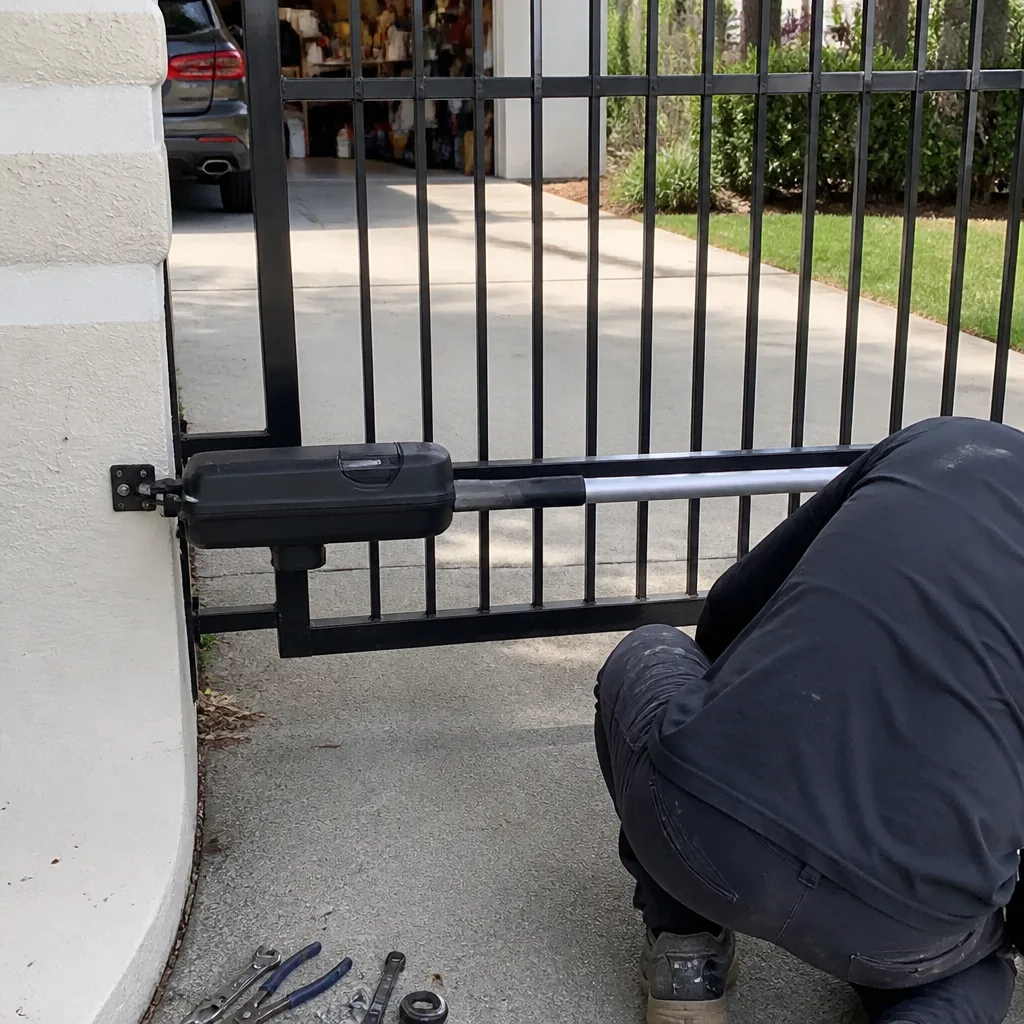
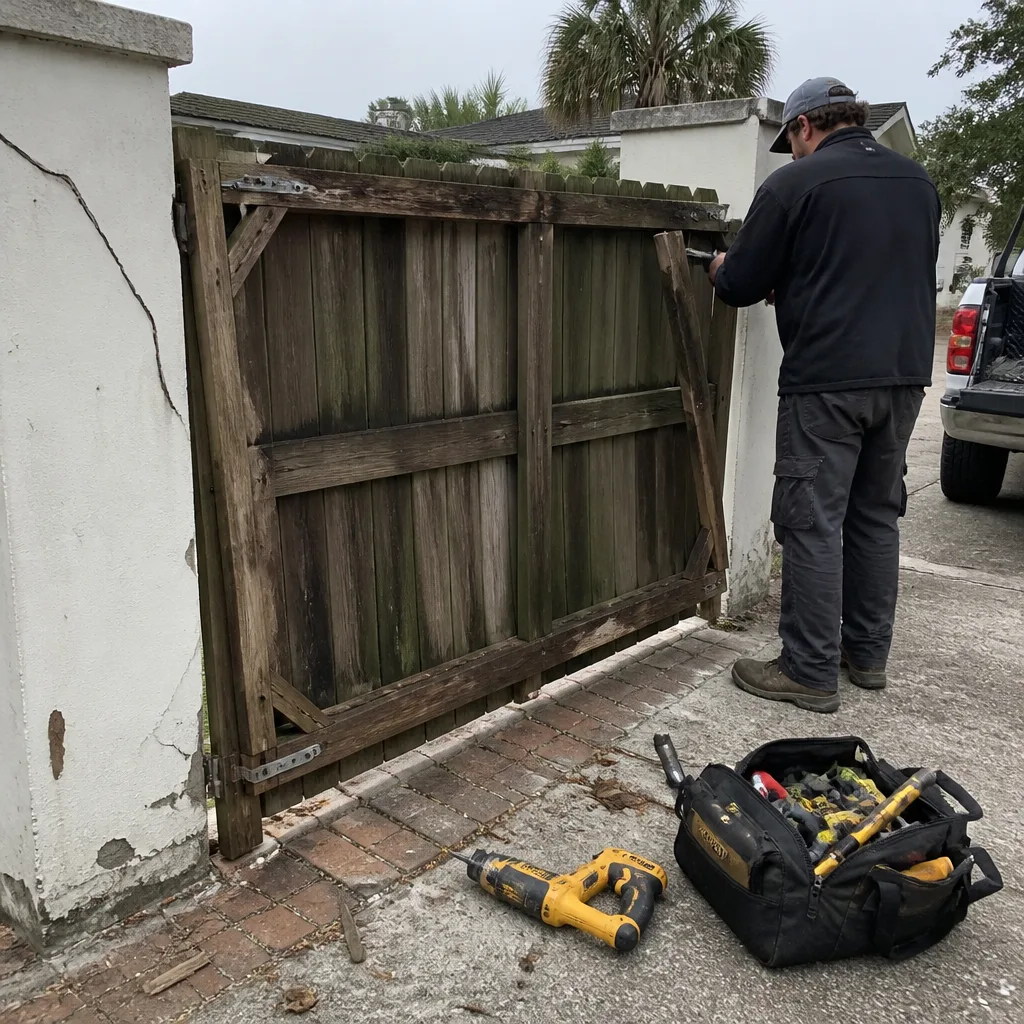
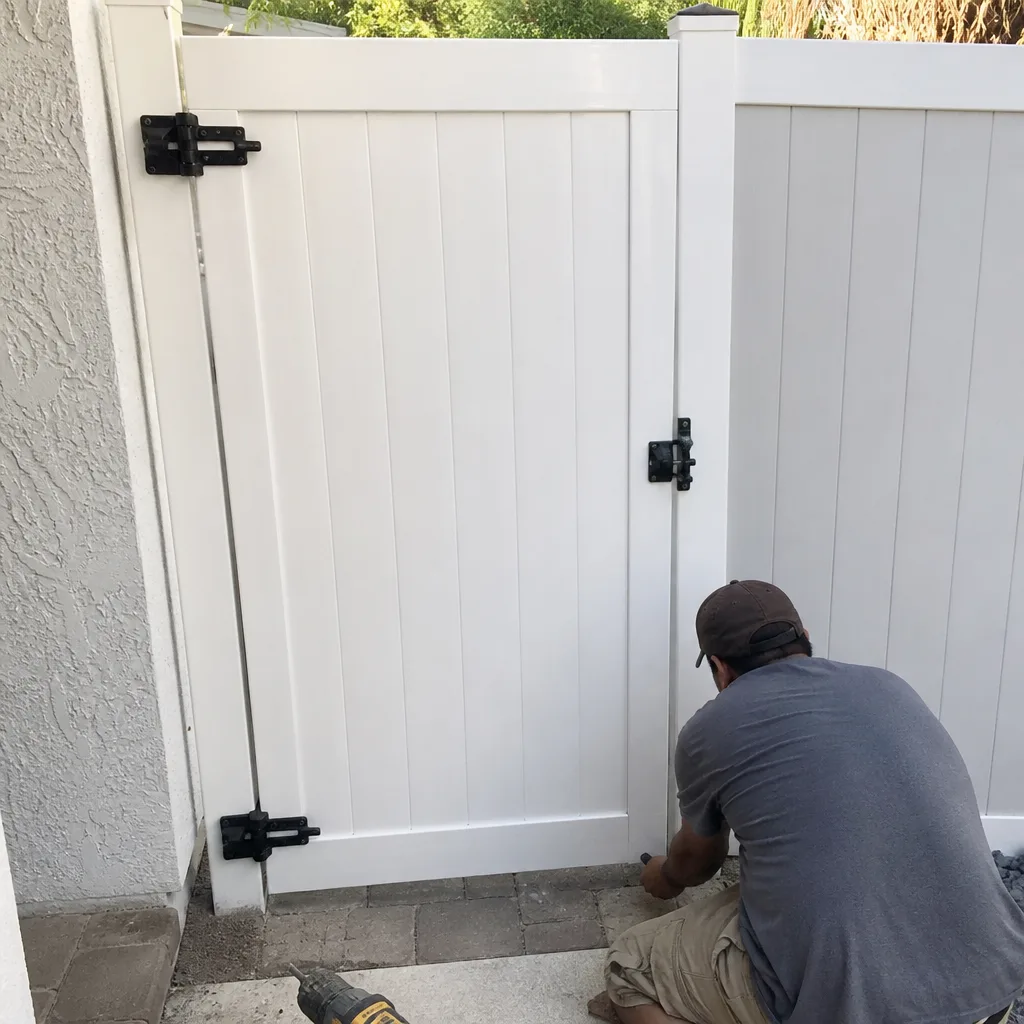
See the difference
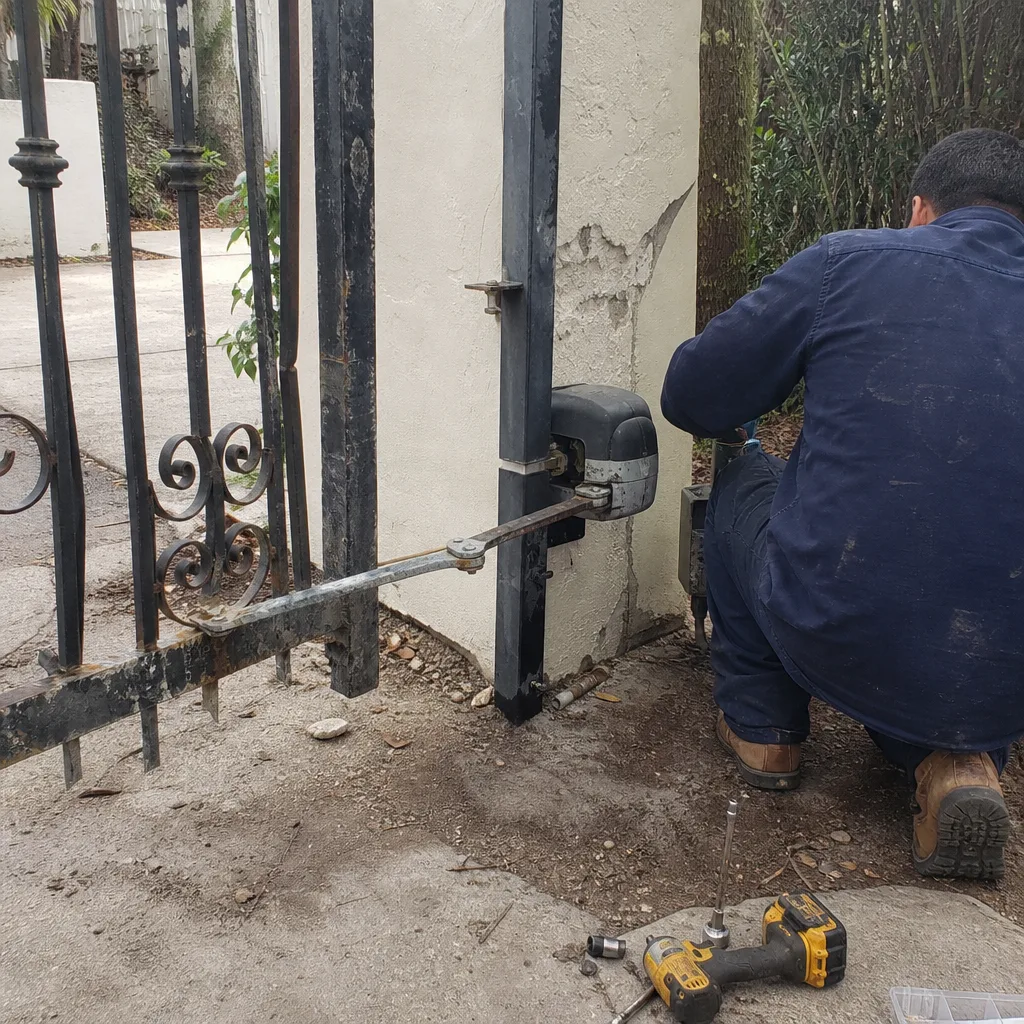 Before
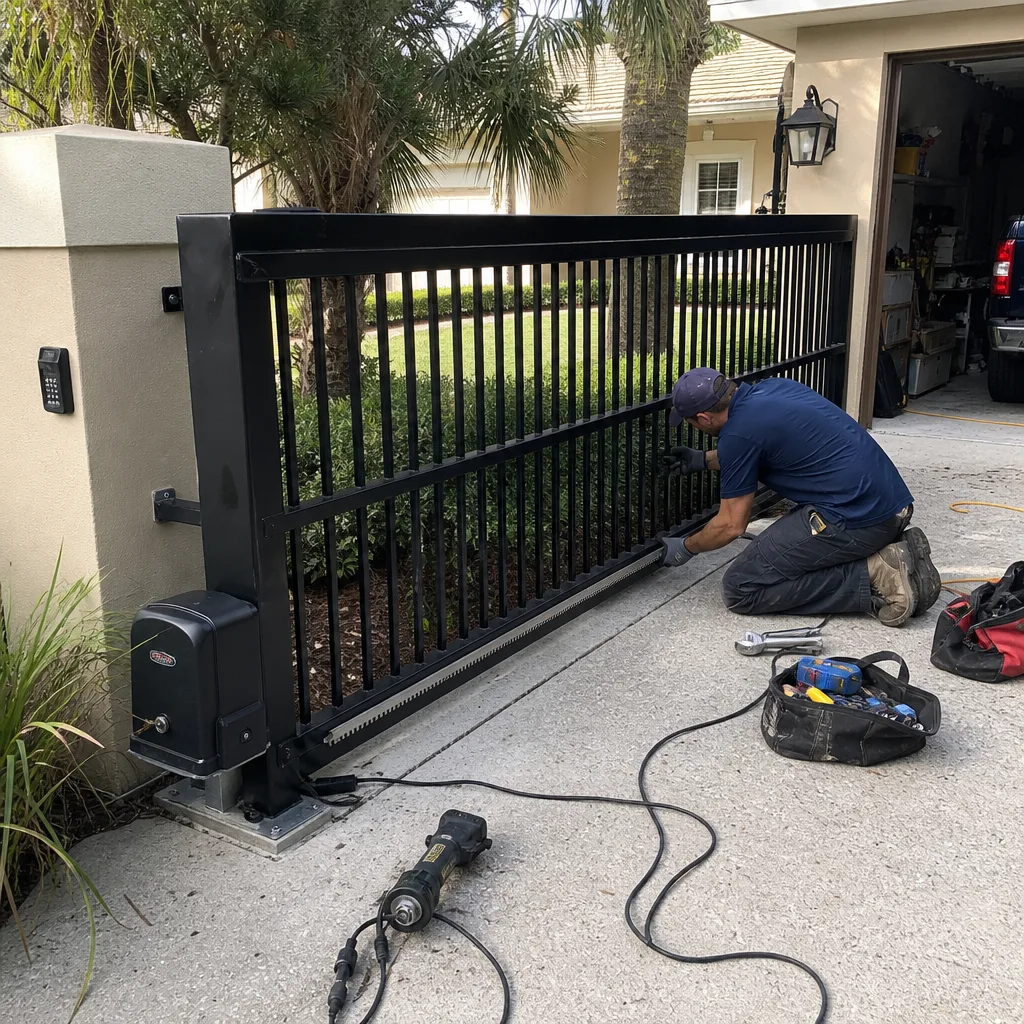 After
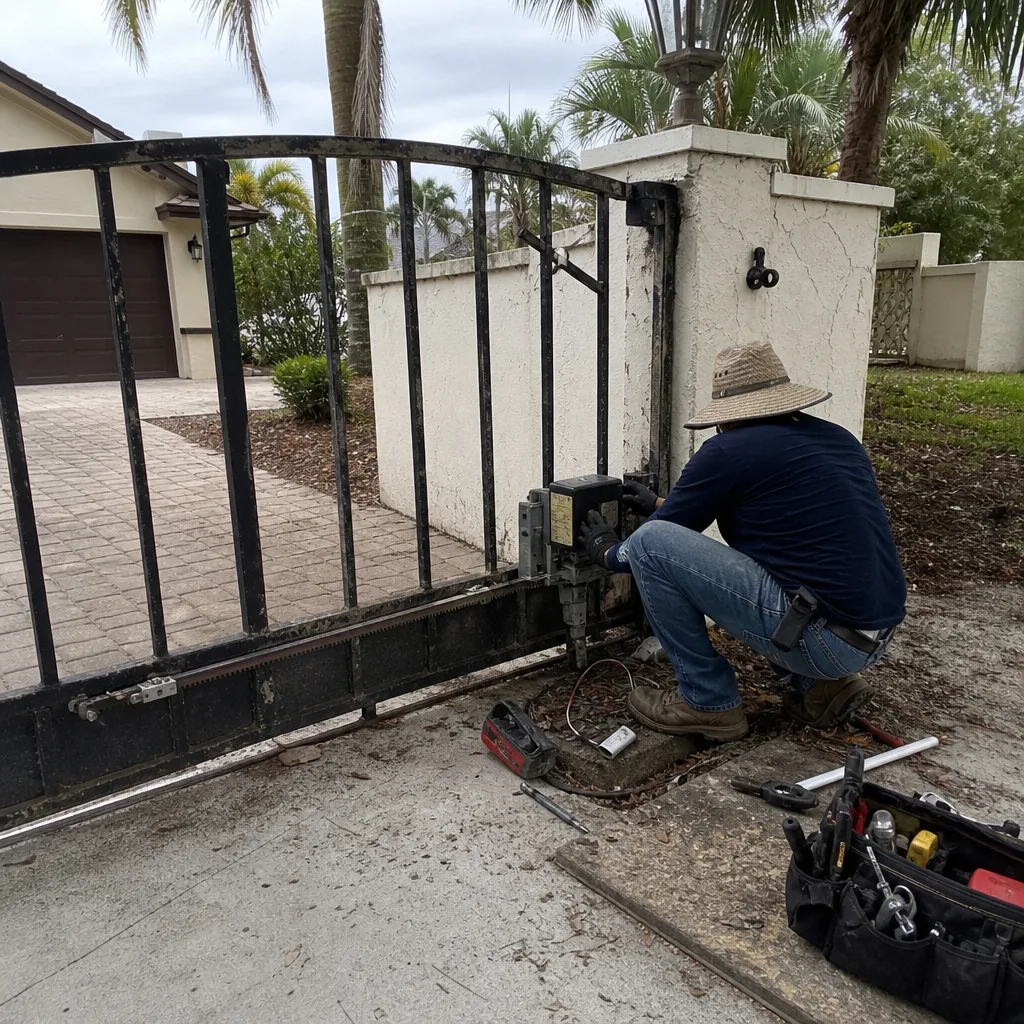 Before
 After
 Before
 After
When to Call a Professional
Call a gate specialist when the gate won’t stay open, won’t close fully, reverses unexpectedly, or makes grinding sounds under load. Call immediately if the gate’s safety sensors stop functioning or if you see burnt wiring, smoke, or moisture inside the operator enclosure. If the gate has been submerged by storm surge or flood water, do not operate it until the electrical system has been inspected. A gate whose control board has failed more than once in two years needs a deeper electrical diagnosis, not another board swap. Regent Gate Repair offers free estimates in Daytona Beach. Call (855) 927-1091 and we’ll tell you over the phone whether it sounds like a simple fix or a full service call.
Frequently Asked Questions
Gate repair in Daytona Beach typically runs $145 to $400 for mechanical repairs like hinge, roller, or latch replacement, while electric gate repair involving control boards, loop detectors, or operator motors costs $350 to $1,200 depending on brand and part availability. The coastal environment means many repairs involve corrosion correction in addition to part replacement, which adds labor time. Call (855) 927-1091 for an exact quote on your specific gate and operator brand.
Most mechanical repairs and common electric gate issues can be completed the same day in Daytona Beach, assuming the needed parts are on the truck or locally available. Brand-specific control boards sometimes require ordering, which adds a day or two. We’ll always confirm whether the fix is same-day before scheduling the visit.
We service nine major gate operator brands: LiftMaster, FAAC, BFT, Linear, Viking, Ghost Controls, DoorKing, Elite, and Mighty Mule. That spans entry-level residential DIY systems through commercial-grade slide and swing gate operators, which means we can diagnose and source parts for the full range of equipment installed across Daytona Beach properties. Call (855) 927-1091 and have your operator’s brand name ready.
Simple gate repairs that don’t change the gate’s footprint or operator type generally don’t require a permit in Volusia County, but a full gate replacement with new posts or a changed gate height usually does. HOAs in many Daytona Beach communities have additional approval requirements for gate styles. We can review your project against current Volusia County code before you commit to anything.
Gate repair covers mechanical components like hinges, rollers, tracks, latches, and the physical gate structure. Electric gate repair covers the automated systems: control boards, loop detectors, safety sensors, operator motors, and wiring. Many Daytona Beach gate problems start mechanical and become electric over time, and we diagnose both from the first service call. The electric gate repair work we do spans everything from a simple sensor realignment to full board replacement.
In Daytona Beach, we see accelerated corrosion on gates within two to three miles of the Atlantic, with the worst cases in waterfront communities and the beachside neighborhoods. The prevailing onshore wind carries salt spray further inland, and gates facing east catch the most of it. Homes west of I-95 still experience salt air but at a slower rate, so they follow the same failure sequence over a longer timeline.
The Bottom Line
Daytona Beach gates fail in a predictable sequence, and the homeowners who catch stage one save the most money. Hinges and rollers corrode first, then wiring and connectors, then control boards. A monthly ten-minute inspection that finds rust early prevents the cascade. For anything involving springs, boards, sensors, or operator motors, get someone who works on gates daily, not a generalist who also does other trades. Whether you need a hinge or a full replacement, the same team handles both. Regent Gate Repair home is always a good place to start looking.
Written by the team at Regent Gate Repair, serving Daytona Beach since 2013.
If you’re outside Daytona Beach proper, we also serve the surrounding communities. See our guides for Gate Repair in Flagler Beach or explore Gate Installation in Flagler Beach if you’re considering a full replacement.