Last updated October 30, 2026
 Wrought iron
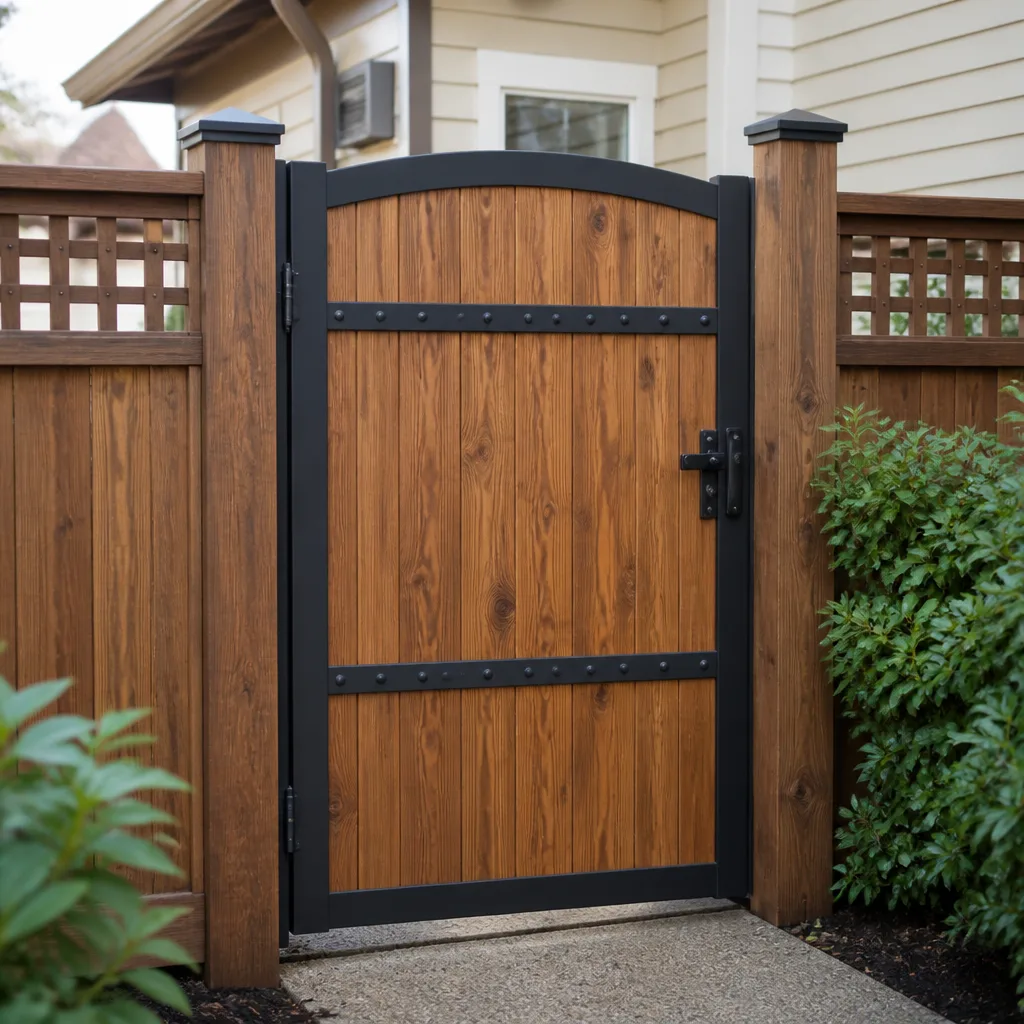 Wood & steel frame
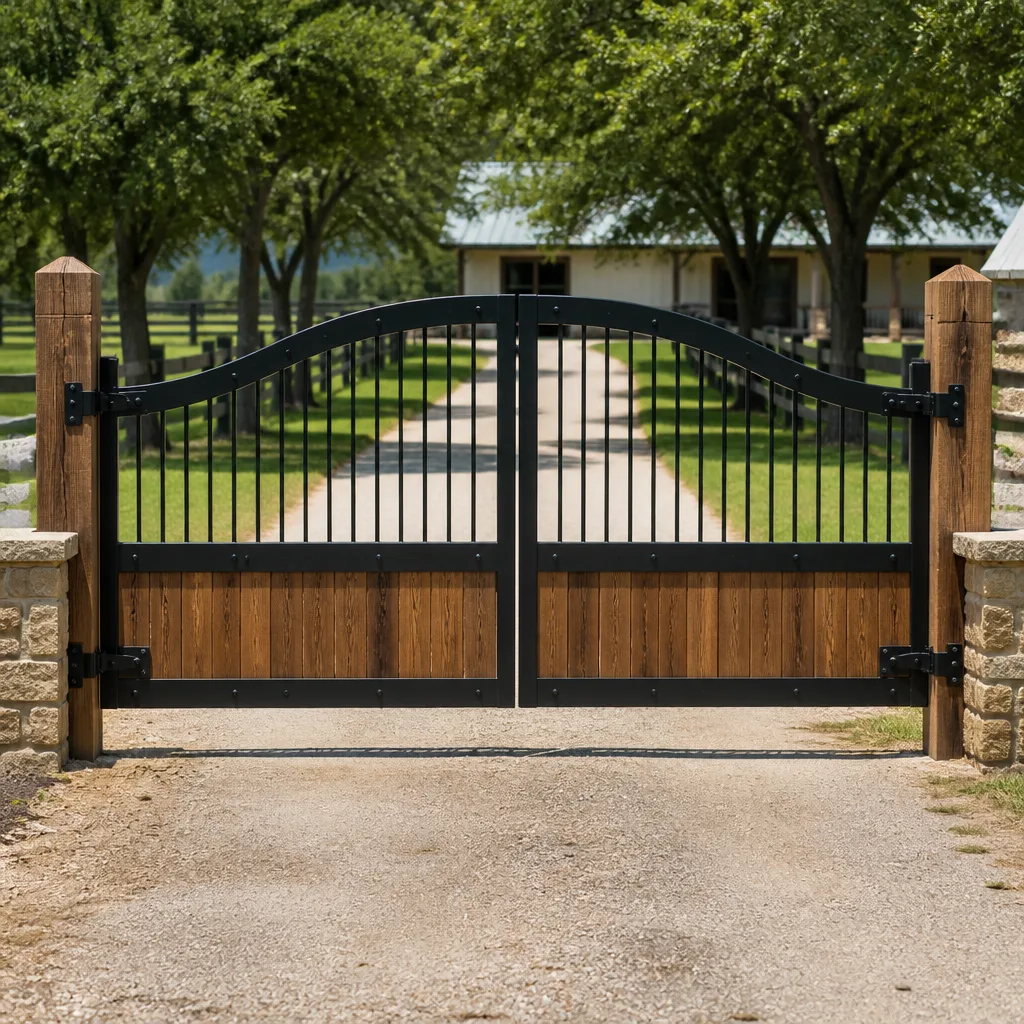 Farm & ranch
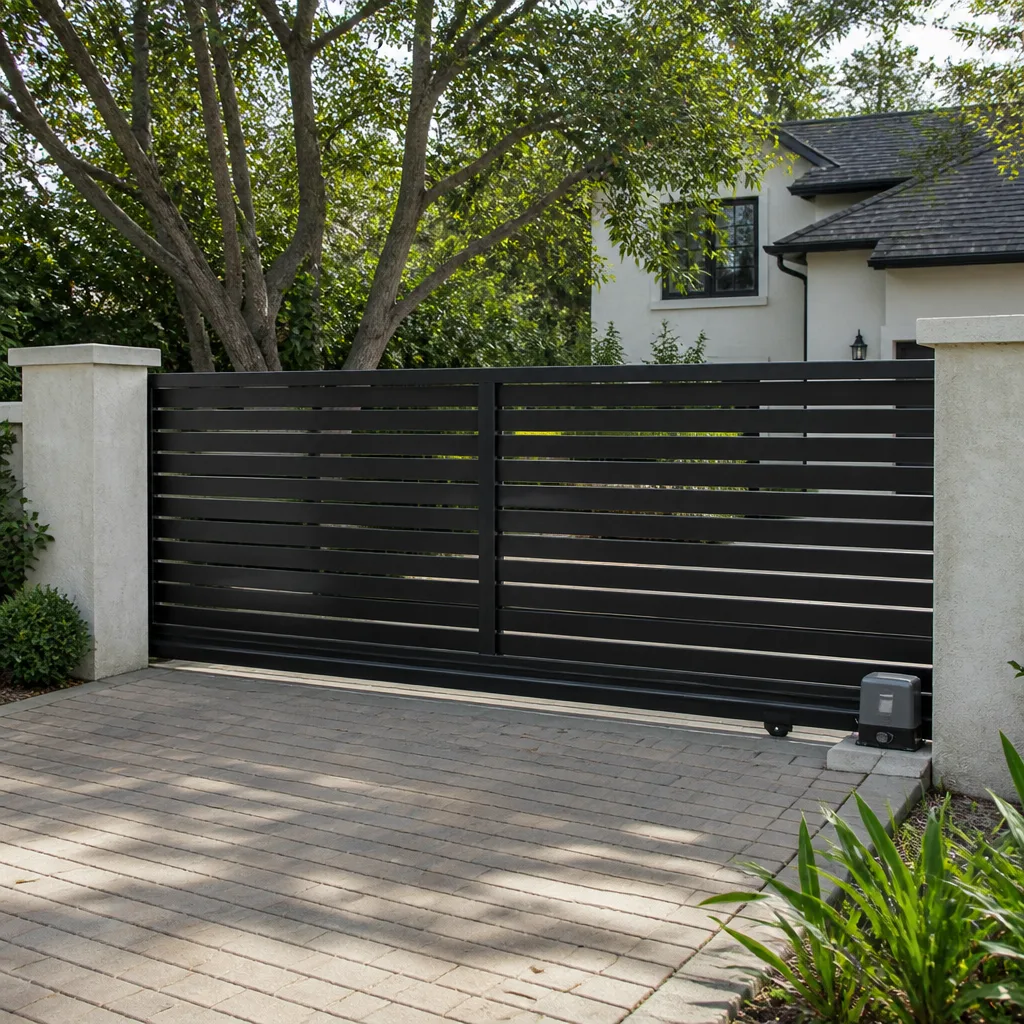 Sliding driveway gates
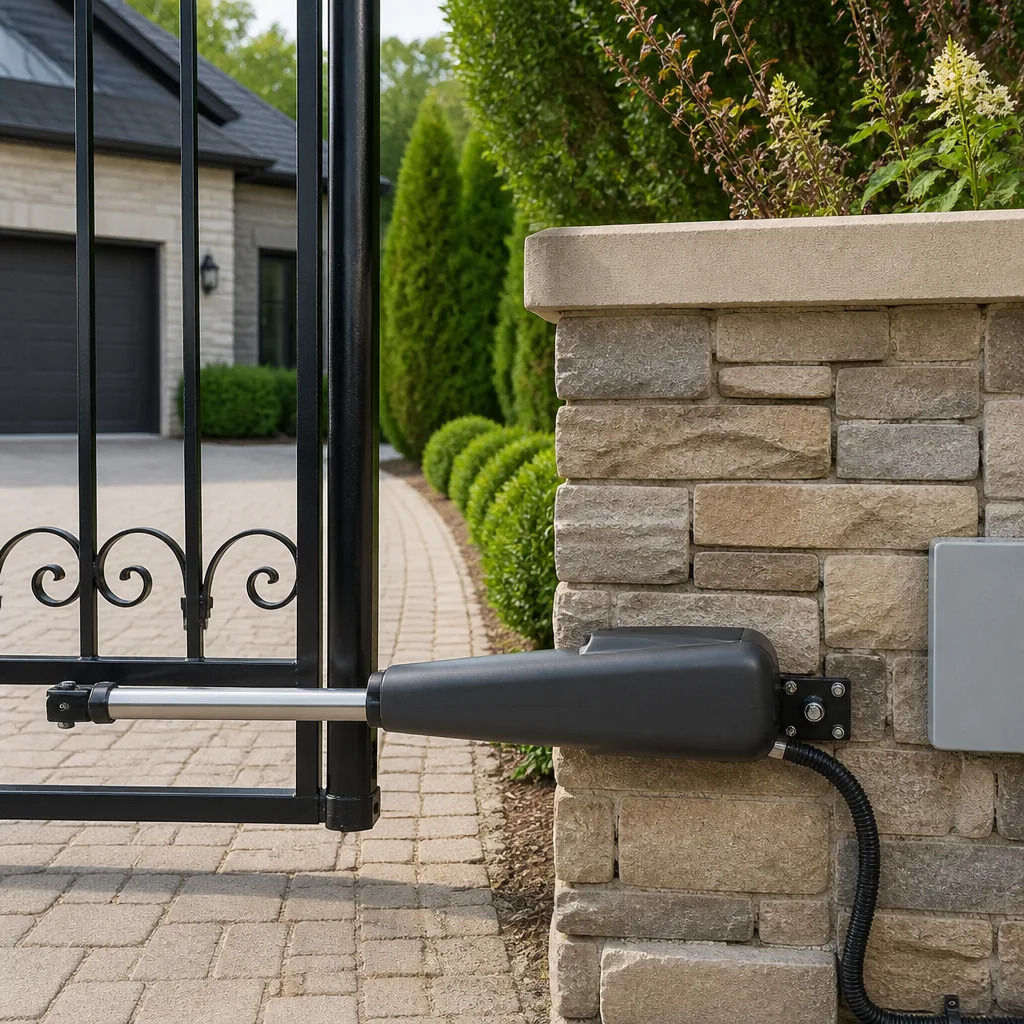 LiftMaster operators
Free on-site gate assessment - hinges, posts, and your LiftMaster or Nice gate operator checked before anything is quoted
The assessment is free and the quote is the invoice.
Get your free estimateThe Complete Guide to Gate Repair in Daytona Beach
Most Daytona Beach homeowners don’t call our Gate Repair services after the first breakdown. They call after the second one, because the first technician replaced a part that wasn’t actually broken. In our experience, roughly two-thirds of the automated gate failures we diagnose in this market trace back to one of five root causes, and the difference between identifying the real one and guessing is the difference between a $90 fix and a $900 misdiagnosis. This guide walks through every common failure mode on residential and commercial gates in Daytona Beach, how coastal salt air changes the equation, and what an honest repair actually looks like.
Styles & brands we work with
Quick Answer
Gate repair in Daytona Beach typically costs between $90 and $900 depending on whether the failure is mechanical (hinges, wheels, chain), electrical (control board, capacitor, transformer), or structural. The five root causes behind most gate failures are power supply issues, logic board failure, mechanical binding, obstruction or misaligned safety sensors, and access control malfunction. A gate-only specialist can usually identify which one applies within the first 30 minutes of a service call.
Table of Contents
- The Five Root Causes of Gate Failure in Daytona Beach
- What Coastal Salt Air Does to Gate Hardware
- Root Cause 1: Power Supply and Wiring Failures
- Root Cause 2: Logic Board and Control Board Failures
- Root Cause 3: Mechanical Binding and Hinge Wear
- Root Cause 4: Obstruction, Safety Sensors, and Loop Detectors
- Root Cause 5: Access Control and Keypad Failures
- Brand-Specific Failure Patterns We See in Daytona Beach
- What You Can Check Yourself vs. What Requires a Technician
- What a Legitimate Same-Visit Repair Looks Like
- Common Mistakes to Avoid
- When to Call a Professional
- Frequently Asked Questions
- The Bottom Line
The Five Root Causes of Gate Failure in Daytona Beach
Every gate failure, no matter how strange it looks from the driver’s seat, falls into one of five categories, as detailed in our DIY vs Professional Gate Repair: The Daytona Beach Homeowner’s Decision Guide. Knowing which one you’re dealing with before you call anyone saves you from paying a technician to figure it out on your dime. It also gives you a filter for who you hire, because a technician who can’t articulate all five is troubleshooting by trial and error.
Here’s the framework we use on every service call in Daytona Beach:
- Power supply and wiring failures. The gate operator isn’t getting voltage, or it’s getting inconsistent voltage because of a failing transformer, a tripped breaker, a corroded wire nut, or a damaged underground feed. This is the most common root cause of a completely dead gate, and the most misdiagnosed.
- Logic board and control board failures. Power reaches the operator, but the brain of the system has failed. This presents as a gate that hums but doesn’t move, a display that’s blank, or a system that ignores every command. Boards fail gradually or instantly depending on moisture exposure, power surges, or simple age.
- Mechanical binding and hinge wear. The motor tries to move the gate, but something physical is resisting. Bent hinges, rusted rollers, low wheel bearings, or a gate leaf that has sagged out of square all create load that the operator eventually can’t overcome.
- Obstruction, misaligned safety sensors, and failed loop detectors. The gate thinks something is in its path and refuses to close, or it won’t open because a vehicle loop detector under the driveway has failed. This is often mistaken for a motor problem.
- Access control failures. The operator is fine, the gate moves fine, but the keypad, remote, card reader, or telephone entry system has stopped sending the signal to open it. This is the only category where the gate itself may be in perfect working order.
If you can narrow your symptom to one of these five buckets before making the call, you’ll have a much better conversation with whoever answers the phone. And in Daytona Beach specifically, you should expect the person on the other end to ask about them.
What Coastal Salt Air Does to Gate Hardware
Daytona Beach sits on a barrier island. That means the air your gate breathes every day carries salt, and salt is the enemy of every electrical and mechanical component on a gate system. Anyone who’s lived here more than two years has seen what the ocean air does to patio furniture, car frames, and outdoor light fixtures. Gate systems experience the same corrosion, except they’re expected to operate reliably every single day.
The specific failure points we see from coastal exposure in Daytona Beach:
- Control board corrosion. Circuit boards housed in operator cabinets develop green corrosion on solder joints and connector pins. This happens even inside sealed housings, because salt-laden humidity works its way through every gasket and vent. A board that looks fine from the outside can have dozens of corroded joints underneath.
- Wiring harness degradation. Copper wire exposed to salt air develops black oxide on the strands. Over time, this creates resistance, which creates heat, which accelerates the corrosion. Connections that worked perfectly for years begin dropping voltage intermittently.
- Hinge and roller oxidation. Steel hardware that would last 15 years in Orlando lasts about 7 here. Bearing surfaces pit, rollers seize, and gate leaves begin to drag. The operator compensates by pulling more current, which eventually kills the motor or the board.
- Grounding failures. The earth connection that protects your control board from lightning and power surges corrodes just like everything else. A bad ground in a coastal environment means a single thunderstorm can take out an entire system.
This is why Daytona Beach gates need a different maintenance rhythm than gates in inland Florida. A gate that’s 20 blocks off the ocean can go three years between service checks. A gate 10 blocks from the surf line should be inspected every 12 to 18 months, more often if it faces the prevailing east winds. The salt doesn’t announce itself. It just works quietly until something fails.
Root Cause 1: Power Supply and Wiring Failures
When a gate goes completely dead, no movement, no hum, no lights on the operator, the instinct is to assume the motor or the board is fried. In our experience across Daytona Beach, the far more common culprit is the power feeding the unit. Breakers trip, GFCI outlets reset themselves, lightning strikes nearby transformers, and underground wire runs that were fine three years ago develop breaks from shifting soil or root intrusion.
Here’s what a technician should check in order, and what you can reasonably verify yourself before calling:
- The breaker and GFCI. Gate operators are usually on a dedicated circuit. Check the breaker panel and any outdoor GFCI outlet the operator plugs into. Power surges from coastal thunderstorms trip these regularly. A simple reset fixes many “dead” gates in seconds.
- The disconnect switch. Most operators have a small toggle switch or pull-out disconnect within a few feet of the unit. Lawn equipment, kids, or a loose cover can knock it off. Look for the obvious before paying for a service call.
- The transformer. Gate operators run on low-voltage DC internally, so a transformer steps down the 120V AC line. Transformers fail slowly, often producing intermittent operation before dying completely. This is a common failure point when the gate works some days and not others.
- The underground wire run. In Daytona Beach, sandy soil shifts, and the wire running from your house to the gate can develop breaks. This shows up as intermittent operation, a gate that works after a hard rain (wet soil conducts better) and fails when dry, or a gate that died immediately after landscaping work.
- Corroded connections. As covered above, salt air attacks every exposed wire nut and terminal. A technician can test for voltage at each point, but finding a corroded connection often requires opening every junction box along the run.
Power failures are usually the cheapest to fix. A tripped breaker costs nothing. A replacement transformer maybe $60 to $150. A bad underground wire run can be more, depending on length. What you want to avoid is paying for a new control board when the board was never the problem. That happens more often than it should, especially when a general handyman takes the call.
Root Cause 2: Logic Board and Control Board Failures
The logic board is the brain of any automated gate system. It reads the signal from your remote or keypad, decides whether the safety sensors are clear, and tells the motor what to do. When it fails, the gate can behave in ways that look like a dozen different problems: it hums but doesn’t move, it opens but won’t close, it ignores one remote but not another, or it moves in the wrong direction entirely.
Board failures generally come from three sources in Daytona Beach:
- Moisture. Even a sealed board can fail if the cabinet gasket wears out or if condensation builds inside the housing. Coastal humidity makes this worse. If you open the cabinet and see moisture beads or white powder residue, the board is living on borrowed time.
- Power surges. Florida has more lightning strikes per square mile than any state in the continental US. A single nearby strike can send a spike through the electrical system that cooks a gate board’s processor, even if the rest of the house appears unaffected.
- Age and heat. Gate boards sit inside metal cabinets that bake in the Florida sun. Components degrade over time, and electrolytic capacitors, the round cylinders on the board, eventually dry out. When they go, the board produces erratic behavior that comes and goes.
A legitimate repair path for a board failure looks like this: the technician confirms power is reaching the board, tests the board’s output to the motor, and either identifies a replaceable component (capacitor, fuse, relay) or recommends a board replacement. Board replacements run a few hundred dollars for residential operators like LiftMaster or Linear, more for commercial boards from FAAC or BFT. A technician who doesn’t test the board directly and just starts swapping parts is guessing. And in our line of work, guessing gets expensive for the homeowner.
Root Cause 3: Mechanical Binding and Hinge Wear
Even with a perfectly healthy operator, a gate that’s physically binding will eventually destroy the motor that moves it. Binding means something is resisting movement: rusted hinge pins, flat spot on a roller, a wheel bearing that’s given up, or a gate leaf that has drooped far enough to drag on the ground. In Daytona Beach, where salt accelerates rust on every exposed steel surface, mechanical binding typically appears sooner than it would inland.
The telltale signs of a mechanical issue rather than an electrical one:
- The gate moves slowly, even when it’s been fine for years.
- You hear a straining or grinding sound while the gate travels.
- One section of travel is harder than the rest, often a dead stop or a visible lurch.
- The gate only fails when it’s cold (metal contracts, bindings tighten) or after rain (rusted surfaces seize).
- The operator’s motor gets hot to the touch after only a few cycles.
Mechanical repairs are usually straightforward for someone who works on gates regularly: free up and lubricate a seized hinge, replace a set of worn rollers or a bad wheel, or re-square a leaf that has sagged. These are the $90 to $300 repairs. But if left unaddressed, the same mechanical issue eventually takes out the motor, and then you’re into a $500 to $900 repair or a full operator replacement. The whole system is connected. One failing component always passes its stress to the next one up the line.
Root Cause 4: Obstruction, Safety Sensors, and Loop Detectors
Every automated gate in Florida is required to have safety devices that prevent it from closing on a vehicle or a person. That’s not optional, and it’s not a luxury feature. It’s the same principle as a garage door sensor: if something is in the path, the gate must not close. When these safety systems fail or get dirty or go out of alignment, the gate typically responds by refusing to close. Many homeowners read that as the operator failing. It’s usually the operator doing exactly what it’s supposed to do.
The three safety components that most commonly cause problems in Daytona Beach:
- Photo-eye safety sensors. These mounted pairs of lenses create an invisible beam across the gate’s path. Dirt, landscaping debris, or a misaligned bracket breaks the beam, and the gate refuses to close. Cleaning the lens with a soft cloth fixes many “broken” gates in about 10 seconds.
- Vehicle loop detectors. These are wires buried in the driveway that sense the metal mass of a car. They tell the gate when a vehicle is waiting and hold it open when someone is halfway through. Loops fail from shifting soil, standing water, or construction damage. A failed loop usually shows up as a gate that won’t open automatically when you pull up, even though the remote works fine.
- Edge sensors. On sliding and some swing gates, a pressure-sensitive edge runs along the leading edge and reverses the gate if it contacts an obstacle. These degrade in coastal weather and eventually produce false readings that stop the gate mid-cycle.
A specialist will inspect all three safety zones before condemning an operator. Non-specialists often skip straight to the motor and waste the customer’s money. If your gate in Daytona Beach stops halfway or won’t close unless you hold the button down, that’s a safety system conversation, not a motor conversation.
Root Cause 5: Access Control and Keypad Failures
We get calls from Daytona Beach homeowners who are convinced their gate is broken when the real problem is that the keypad stopped talking to the operator. Or the remote’s battery died. Or the phone entry system lost its programming after a power outage. The gate moves fine when you test it manually. It just isn’t receiving the command to open.
Access control components that commonly fail in this area:
- Wireless keypads. Outdoor keypads in coastal environments face direct sun, rain, and salt. Buttons wear out, the internal transmitter corrodes, or the programming gets wiped by a power surge. Some keypads are repairable, but many need replacement. Expect $150 to $400 installed for a decent residential unit.
- Remotes and receivers. The remote itself is the simplest fix: check the battery. The receiver inside the operator cabinet is more prone to failure, especially the antenna. Damaged antennas produce short range, intermittent reception, or the need to press the button multiple times.
- Card readers and telephone entry. Commercial systems on rental properties or HOA communities run card readers, key fobs, and sometimes cellular-based telephone entry. These fail from lightning, moisture, or power outages that corrupt their programming. This is squarely in the commercial-grade realm, where brands like DoorKing and FAAC dominate in the Daytona Beach market.
- Intercom and call box wiring. The wire from the gate to the house or front desk can be cut, pinched, or corroded. Signal loss produces dead buttons, static, or one-way audio.
If the gate opens with the manual release but not from any of the automatic controls, you have an access control problem, not a mechanical one. That distinction alone saves a service call from heading in the wrong direction.
Brand-Specific Failure Patterns We See in Daytona Beach
Every gate operator brand has its own personality, its own engineering philosophy, and its own predictable way of failing. This matters because a technician who recognizes the failure pattern for a specific brand can diagnose faster and quote more accurately. A technician who doesn’t has to start from zero on every call. We work on all of the major brands in this market, including FAAC, BFT, Linear, and Viking, among others.
Some failure patterns we see regularly in Daytona Beach:
- FAAC hydraulic operators. FAAC is a commercial-grade Italian brand common on high-end residential and commercial gates in this area. The hydraulic models use fluid pressure to move the gate, and the weak point is the hydraulic seal. Seals dry out from coastal heat and sun exposure, begin to weep fluid, and the gate loses power or drifts. Repair requires opening the hydraulic cylinder, not just adding fluid, because the leak always comes back.
- LiftMaster residential operators. LiftMaster dominates the residential market. Their swing-arm and slide operators are generally reliable, but we see consistent issues with the battery backup system after our storm seasons. When the battery ages out (usually 2-3 years in coastal humidity), the gate drops into a fault mode every time there’s a power blip.
- Linear and Elite operators. Both brands are common in mid-range residential installations. Their boards are generally solid, but the limit switch assemblies tend to drift out of adjustment as gates age. This produces false reversing, which looks like a safety sensor issue but is actually a mechanical adjustment.
- Viking and BFT commercial systems. Viking and BFT run a lot of the commercial gates at apartment complexes and business parks around Daytona Beach. The typical failure there is in the wiring and connections to the external safety loops and card readers, not in the operator itself. A technician who starts by replacing the control board before checking the loop wire is about to waste a property manager’s budget.
There’s one more brand worth a mention, because Mighty Mule systems show up constantly in the Daytona Beach DIY and light-residential market. Their swing-arm operators are inexpensive and popular, but the arm gear assembly is a known wear point. When a Mighty Mule gate swings halfway and stops, the gear train is usually the culprit, not the board and not the motor.
What You Can Check Yourself vs. What Requires a Technician
You don’t need a technician for everything. Some checks are safe, take two minutes, and might save you the cost of a service call entirely. Other diagnostics involve opening a control cabinet with live 120V inside and genuinely require someone trained to work on it safely. We’ll be clear about the line.
What you can safely check
- The breaker and any visible GFCI outlet. Reset them once. If the breaker trips again immediately, stop and call a technician. There’s a short somewhere.
- Remote batteries. Replace them. If the remote still doesn’t work, try the second remote. If neither works, the receiver or board is the likely issue.
- Photo-eye alignment. Look at the sensors on either side of the gate. If the small light isn’t burning steadily, the lens may be dirty or the sensor may have been knocked out of alignment by a vehicle or a palm frond. A gentle wipe and a visual alignment check is fine. Do not attempt to rewire anything.
- Obvious physical obstruction. Branches, sand, or storm debris wedged in the gate track or against the leaf. Clear it if it’s safe to do so.
What you should leave to a professional
- Anything that involves opening the operator cabinet, where live AC power lives.
- Diagnosing or replacing a control board.
- Adjusting or replacing gate hinges, rollers, or weld points on a heavy gate leaf. A gate leaf under tension can move unpredictably and cause serious injury.
- Any repair that involves the gate operator’s mainspring or counterbalance. These components are under high tension. Even experienced techs treat them carefully.
- Replacing safety sensors or vehicle loop wire. These interact with the control system and need to be installed and tested correctly.
If your Daytona Beach gate’s symptom involves the gate itself moving unexpectedly, becoming detached from a hinge, or operating on only one side of a double-leaf system, don’t try to manhandle it. Call someone who does this work every day.
What a Legitimate Same-Visit Repair Looks Like
Here’s the uncomfortable truth about gate repair in Daytona Beach: a technician who “needs to order parts” on a common repair is often a technician who didn’t stock their truck. That’s not automatically a red flag. Some parts are genuinely special-order. But for the most common failures, a prepared specialist should have the fix-ready parts on board when they arrive.
What a legitimate same-visit repair looks like when we roll up to a Daytona Beach home:
- System diagnosis first. The technician tests the power supply, the board, the safety devices, and the mechanical condition of the gate before quoting anything. That should take 30 to 45 minutes for most systems.
- A written quote before any work begins. The price is agreed on up front, in writing, before a single component gets removed. Not an estimate given after the fact, not a verbal “we’ll take care of it.” A number, on paper, that you approve with a signature or a call.
- Common parts are on the truck. Resistors, capacitors, fuses, limit switches, photo eyes, remotes, and common boards for the major brands we support. That means the repair happens today, not in two weeks.
- Testing after the repair. The gate cycles multiple times, the safety sensors get tested, and the manual disconnect gets verified. A repair isn’t done until the whole system works, not just the replaced part.
- You get told what failed, why it failed, and whether it’s likely to recur. This is the part that sets a specialist apart. We want you to understand your gate, because an informed customer makes better maintenance decisions.
If the first technician who comes out replaces a part, the gate works for three weeks, and the same symptom comes back, that’s a misdiagnosis. The underlying cause was never addressed. That’s the repair call that wasn’t the first, it was the second.
Common Mistakes to Avoid
- Replacing the control board without testing the power supply. If the incoming voltage is the problem, a new board will either fail immediately or fail again within weeks. This is the most expensive common misdiagnosis we correct. Test the power first, always.
- Ignoring the safety sensors. A gate that won’t close is usually a sensor issue rather than a motor issue. Replacing an operator because the photo eyes are dirty is like replacing a car engine because the battery cable is loose. Find out what’s actually telling the gate what to do.
- Lubricating without cleaning. Spraying lubricant over rusted, pitted metal creates a grinding paste that accelerates wear. Surfaces need to be cleaned of salt and corrosion before they’re lubricated. In Daytona Beach, that cleaning step is non-negotiable.
- Hiring on price alone. The lowest bid on gate repair often comes from someone who doesn’t understand automated systems. When the job involves a control board or a safety loop, that person is learning on your gate. You’ll pay for the cheap bid twice: once to them, and once to the specialist who fixes their work.
- Skipping preventive maintenance on coastal property. A gate 10 blocks from the ocean in Daytona Beach lives in one of the harshest environments for electronics and steel in the state. Inspecting it every 12 to 18 months costs a fraction of what an emergency replacement costs.
- Assuming a “gate person” and a “garage door person” are interchangeable. They’re not. Automated gate systems run on different operators, different safety standards, and different failure patterns. A garage-door tech who works on overhead doors most of the week won’t have the same depth on a FAAC hydraulic operator or a Viking slide gate.
- Ignoring an intermittent gate. It works some days and not others, so you live with it. But intermittent is the warning sign that precedes a complete failure, often at the worst possible time (during a storm, when you’re leaving for work, or when you’re trying to secure the property). Address it early.
When to Call a Professional
Call a professional when the gate won’t operate from any control, when it moves erratically, when it reverses mid-cycle, when you hear grinding or see metal fatigue at a hinge or weld, or when the safety sensors won’t clear. If you’ve checked the breaker, the remote batteries, and the photo eyes and the problem persists, the next step is opening the cabinet or touching the mechanical hardware. That’s the moment to hand it off. Regent Gate Repair offers free estimates in Daytona Beach. Call (855) 927-1091 and we’ll talk through what you’re seeing before we even schedule the truck.
For a broader look at how our service works, start on the Regent Gate Repair home page. We also serve nearby coastal communities. If you’re further north, see Gate Repair in Flagler Beach, Electric Gate Repair in Flagler Beach, and Gate Installation in Flagler Beach.
Frequently Asked Questions
Gate repair in Daytona Beach typically runs between $90 and $900 depending on the failed component. A tripped breaker or dirty photo eye costs nothing or a minimal service call. A replacement transformer, capacitor, or limit switch usually lands in the $90 to $250 range. A failed control board or a worn hydraulic seal on a commercial operator like FAAC pushes toward the $500 to $900 range or higher. The price you’re quoted should always be agreed on before any work starts. Call (855) 927-1091 for an exact quote, our estimates are free.
We schedule service in Daytona Beach throughout the week, and our trucks carry the common parts needed to complete most repairs in a single visit. If your gate is down and you need it back in operation quickly, call (855) 927-1091 and we’ll get you on the schedule.
A gate that stops midway and reverses is almost always responding to an obstruction signal from a safety sensor, a misaligned photo eye, or a failed motor limit switch. The safety system is doing its job, which is protecting you and your vehicles. The repair path is to inspect the sensor beam, check for physical obstruction in the track, and test the limit switches that tell the operator where the gate’s open and closed positions are.
Yes, and Daytona Beach gets more of it than most Florida markets. Salt-laden humidity corrodes solder joints on control boards, eats through wiring connections, and accelerates rust on hinges and rollers. A gate a few blocks from the ocean needs more frequent inspection than a gate further inland. It’s the single biggest environmental factor in coastal gate repair.
If the remote opens the gate but the keypad doesn’t, the gate operator and receiver are working. The problem is either the keypad itself, its programming, or the wiring between the keypad and the operator. Start with a fresh battery in the keypad, then make sure its code matches the receiver. If neither solves it, a technician can test the signal output and determine whether it’s a keypad replacement or a wiring issue.
Most older gates are worth repairing when the failure is electrical or limited to a single mechanical component. If the operator is old enough that its brand no longer exists, or if the frame shows structural rust, cracked welds, or sagging that can’t be squared back up, replacement starts making financial sense. The calculation comes down to repair cost versus the age and structural condition of the whole system. We install gates as well as repair them, so the same assessment covers both paths.
The Bottom Line
For more guides & resources, visit our blog. Most gate failures in Daytona Beach trace back to one of five root causes: power, board, mechanical, obstruction, or access control. The faster you know which one you’re dealing with, the faster you get an honest repair at a fair price. Coastal salt air complicates every one of these failures, which is why this market needs a gate specialist who sees those patterns daily, not a generalist who guesses. Understand what’s actually wrong, check the safe things yourself, and call a professional for everything behind the cabinet door. Get the right diagnosis the first time, and your gate will be the reliable part of your property, not the thing you worry about every time it rains.
Written by the team at Regent Gate Repair, serving Daytona Beach since 2013.
See the difference
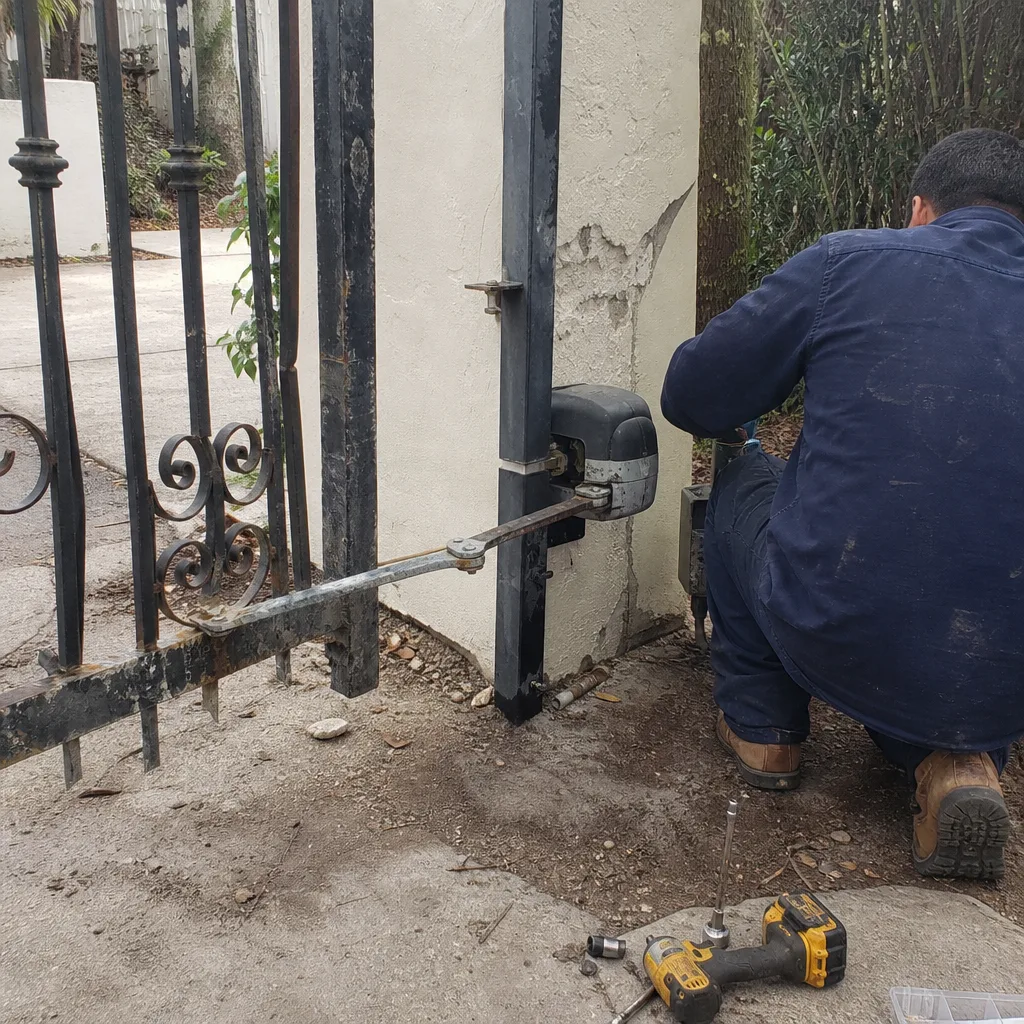 Before
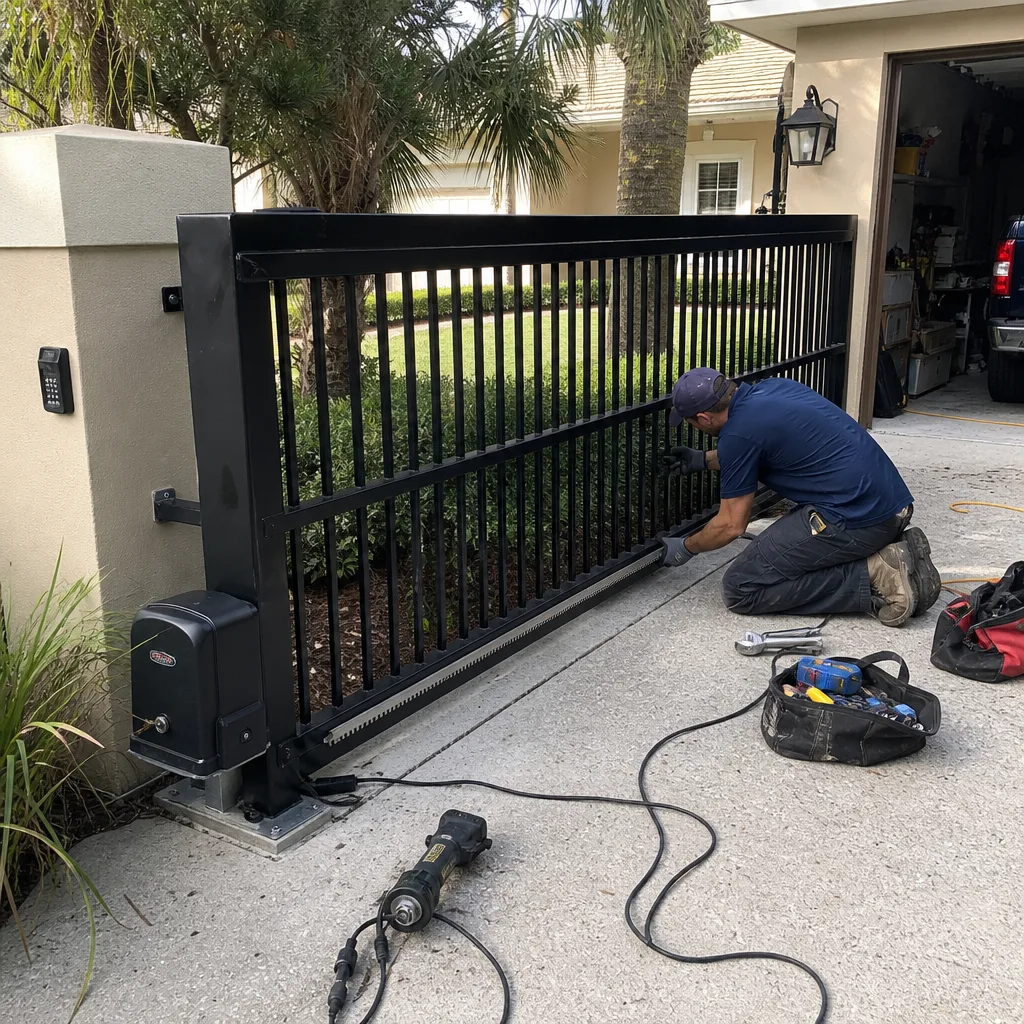 After
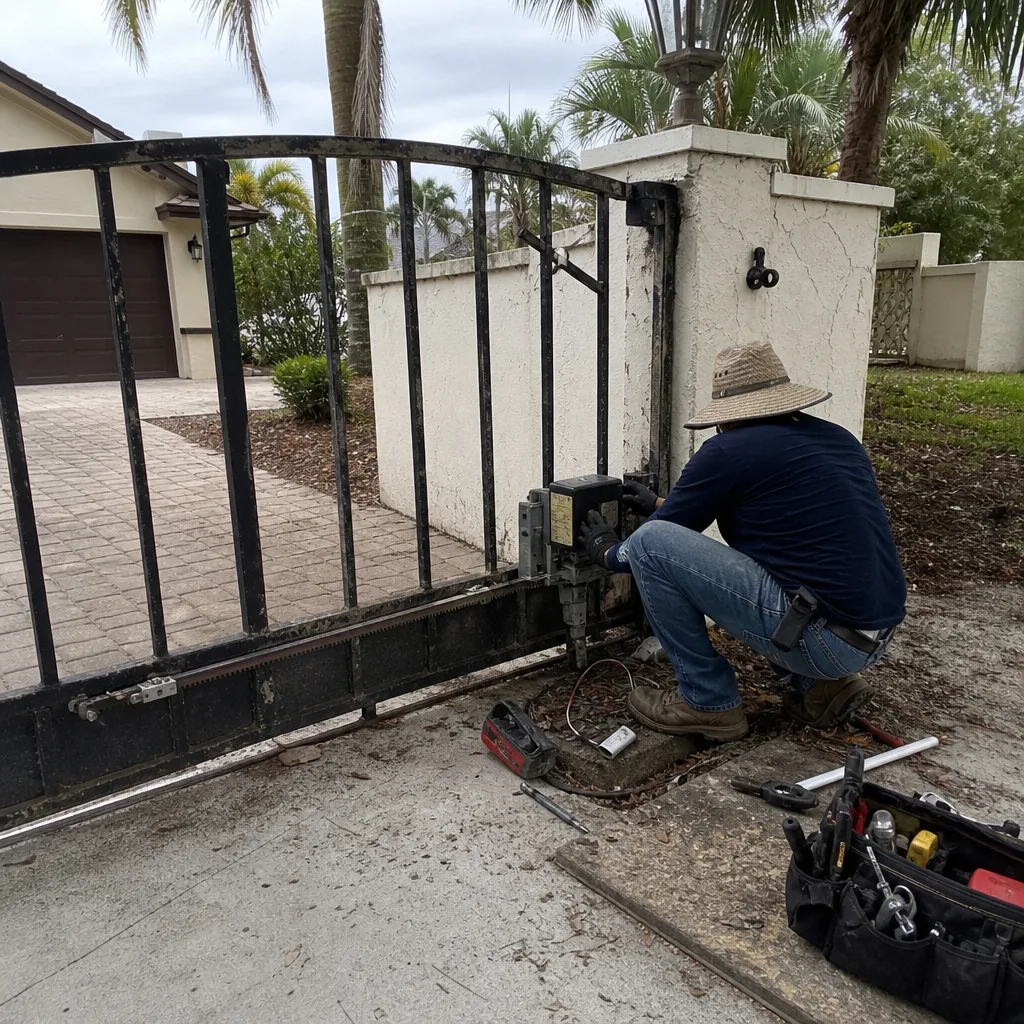 Before
 After
 Before
 After