
Last updated October 30, 2026
 Wrought iron
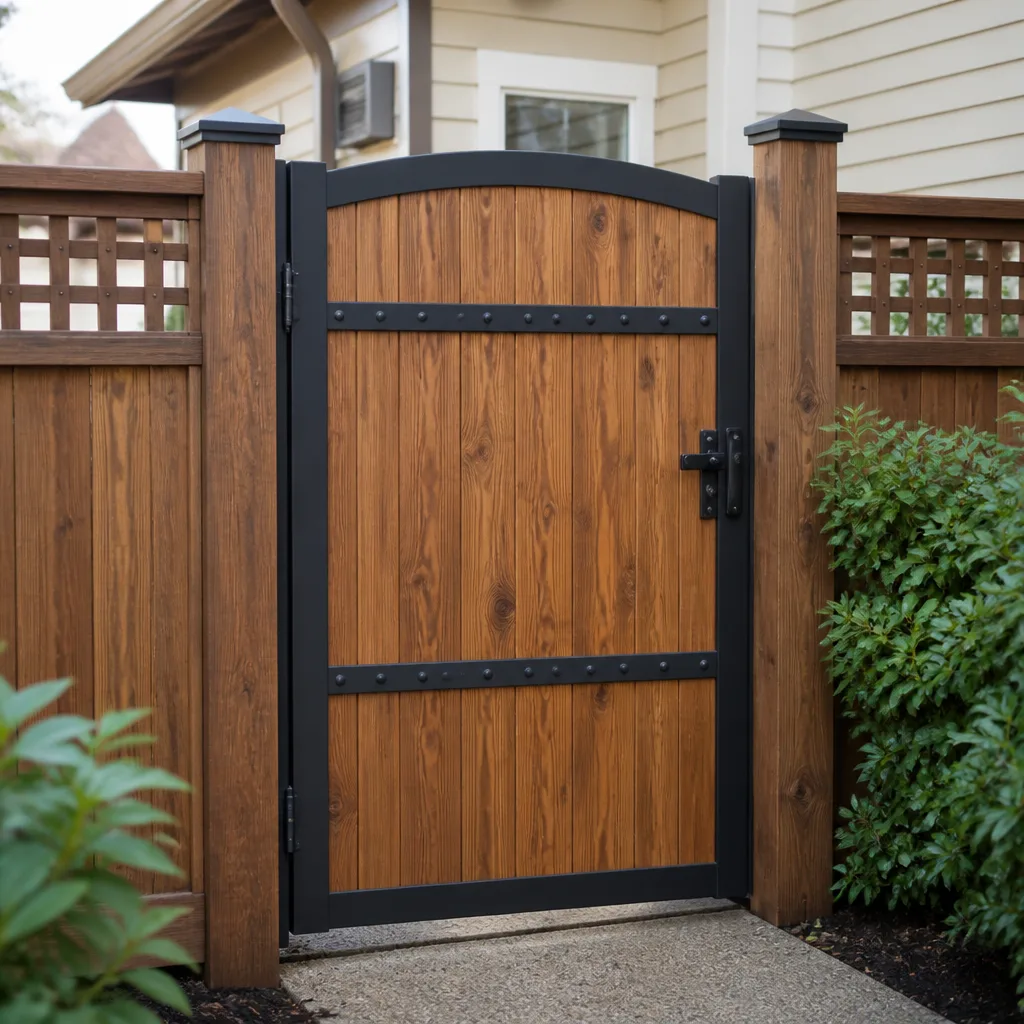 Wood & steel frame
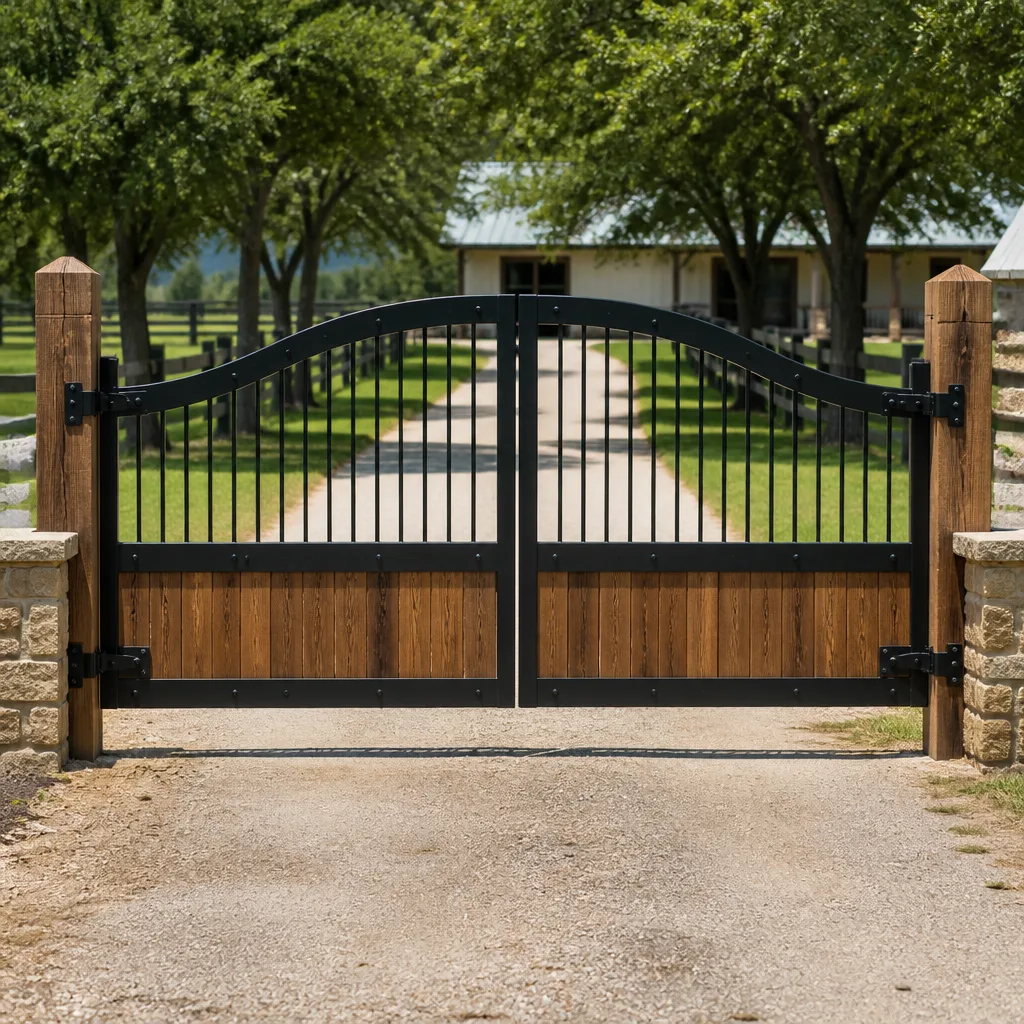 Farm & ranch
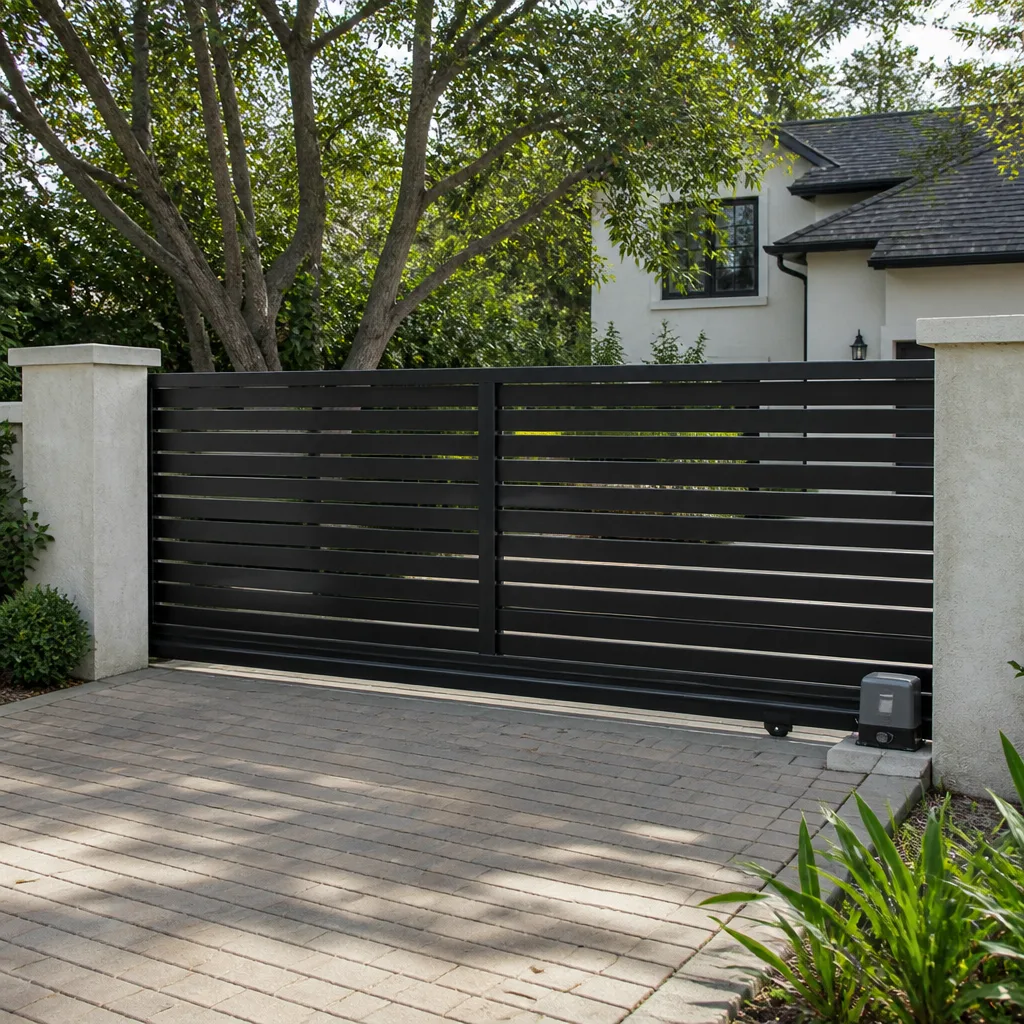 Sliding driveway gates
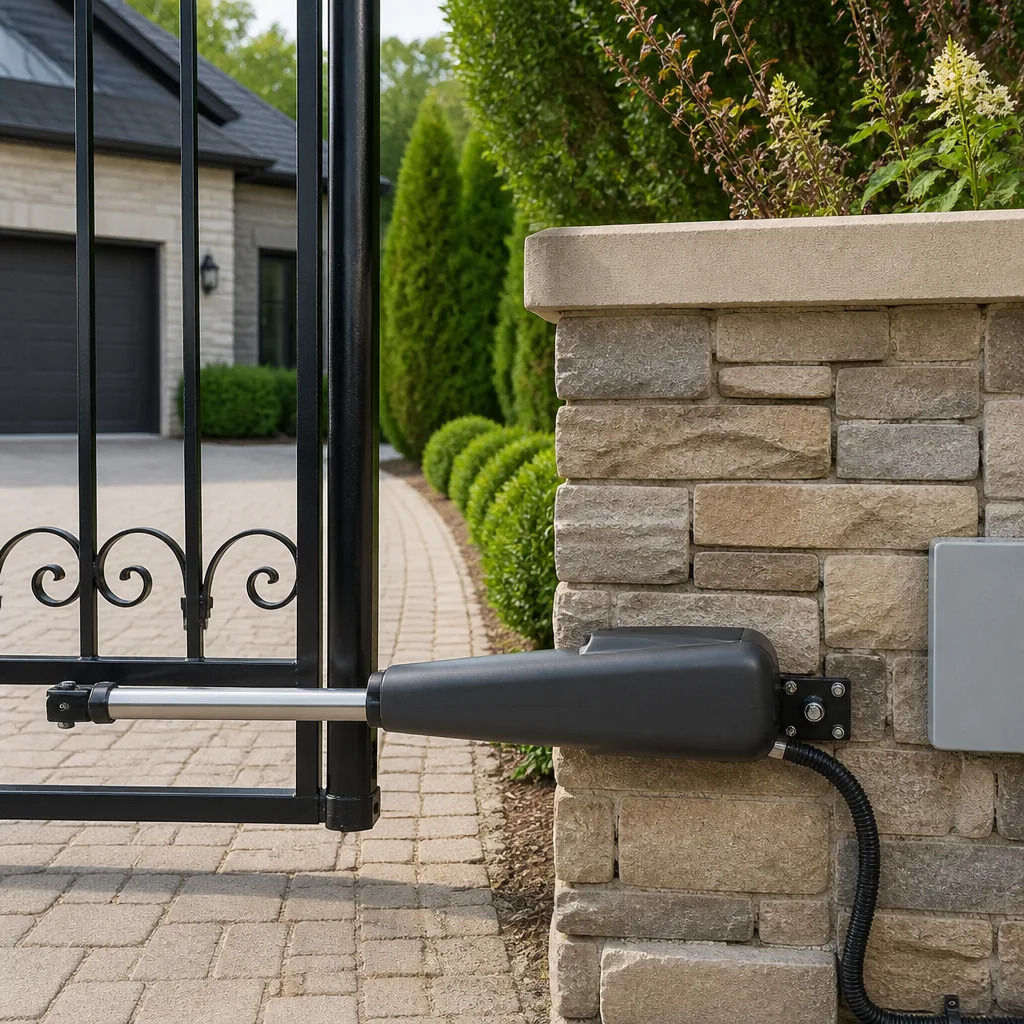 LiftMaster operators
Free on-site gate assessment - hinges, posts, and your LiftMaster or Nice gate operator checked before anything is quoted
The assessment is free and the quote is the invoice.
Get your free estimateGate Repair Permits, Codes & Inspections in FL: What You Need to Know
Here’s something most homeowners in Daytona Beach don’t realize until it’s too late: a gate replacement that crosses a structural threshold in Florida triggers a permit requirement that many installers quietly skip, and when the township or a home inspector catches it later, the liability lands squarely on the property owner. Not the contractor who disappeared after cashing the check. This guide walks through the Florida Building Code provisions that govern automated gates versus simple repairs, what Volusia and Flagler counties actually require at the permit counter, how HOA rules run parallel to municipal permits, and what unpermitted gate work means for your insurance and your ability to sell the house. We’ll give you the exact language to ask for, the timelines to plan around, and the questions that separate a gate specialist from a contractor hoping you won’t ask.
Styles & brands we work with
Quick Answer
Simple Gate Repair services like hinge replacements, wheel adjustments, or control board swaps generally do not require a permit in Florida. But installing a new automated gate system, replacing a gate that exceeds certain structural thresholds, or running new electrical to a gate operator typically does, and the specific requirements vary by county. In Volusia County, where Daytona Beach sits, most new automated gate installations and substantial replacements need a building permit plus an electrical permit and a final inspection.
Table of Contents
- Florida Building Code: The Repair vs. Installation Line
- Volusia County and Flagler County: Submittals and Turnaround Times
- HOA Gate Modifications and Municipal Permits: Two Approval Tracks
- “Like-for-Like Replacement” in Florida: What It Actually Means
- Unpermitted Gate Work: Insurance and Home Sale Consequences
- What a Legit Automated Gate Permit Package Looks Like
- What Permits Cost and How Long They Take in Daytona Beach
- Common Mistakes to Avoid
- When to Call a Professional
- Frequently Asked Questions
- The Bottom Line
Florida Building Code: The Repair vs. Installation Line
The Florida Building Code (FBC) doesn’t hand you a single tidy chapter called “gates.” Gate work falls under multiple sections depending on what’s being done: structural (the gate itself), electrical (the operator and wiring), and sometimes fire access (for commercial or community gates). Understanding which section applies to your project is the difference between a legal repair and an unpermitted installation.
The core distinction is simple: repairs that restore a gate to its original operating condition using equivalent components don’t require a permit. Installations, replacements that exceed the original scope, structural modifications, and new electrical work do.
Here’s how that plays out in the real world, the way we see it across Daytona Beach and the surrounding communities:
- No permit required: Replacing a worn hinge, swapping a broken wheel, adjusting a sagging gate leaf, replacing a failed control board with an equivalent model, fixing a bent track, or remounting a gate that’s come loose from its post. These are repairs that restore function without changing what the gate is. If you’re fixing a Mighty Mule operator that stopped responding, that’s a repair. No permit.
- Permit required: Installing a brand-new automated gate where no gate existed. Replacing a manual gate with an automated one. Replacing a gate that’s substantially larger, heavier, or engineered differently than the original. Running new electrical service to a gate operator. Installing any gate on a commercial property with access control. Installing a gate that serves as a required fire access point.
- Gray zone (ask your county): Replacing a full gate leaf with the same dimensions and weight but a different material. Some inspectors consider this like-for-like. Others treat it as a new installation requiring engineering review. In Volusia County, the answer often depends on whether the posts are being reused or set new.
The electrical side is where homeowners get tripped up most. The FBC’s electrical provisions (Chapter 27 in the Florida Building Code, Building volume, and the adopted NEC) treat an automated gate operator as electrical equipment. If you’re adding a new operator, a new circuit, a loop detector, or running power to a gate that didn’t have it, you need an electrical permit. Even if all you’re doing is replacing a failed transformer or control board in kind, some counties still want an electrical permit pulled for the work to be logged.
There’s also a lesser-known FBC requirement that applies specifically to automated gates: safety device compliance. Under the code and UL 325 (the standard that governs gate operator safety), automated gates must have functioning safety edges, photo eyes, or other entrapment protection devices. If a gate operator fails and the safety devices are also non-functional, replacing just the operator doesn’t legally bring the gate into compliance. The whole system has to be brought up to current safety standards. That’s not a repair. That’s a system upgrade, and it can require a permit depending on what’s being changed.
If you’re working with a gate specialist in Daytona Beach, they should be able to tell you within minutes whether your specific job triggers a permit, and they can point you to our Gate Repair Troubleshooting: Common Problems and How to Fix Them for context. If they can’t answer, or if they wave the question off, that’s your signal to get a second opinion before any work starts.
Volusia County and Flagler County: Submittals and Turnaround Times
The two counties that matter most to Daytona Beach area homeowners are Volusia County (which includes Daytona Beach, Port Orange, Ormond Beach, and New Smyrna Beach) and Flagler County (Flagler Beach, Palm Coast, Bunnell). Each county has its own permitting office, its own submittal requirements, and its own turnaround schedule. And they don’t work the same way.
Volusia County
Volusia County’s Building and Zoning Division processes gate-related permits through a standard building permit application. For an automated gate installation, you’re typically submitting:
- A completed building permit application with the property address, parcel ID, and a description of work that clearly states it’s for a vehicular gate.
- A site plan or survey showing where the gate sits on the property relative to the property lines, the driveway, and any easements. This matters because gates in Volusia County generally need to be set back from the property line far enough that a vehicle can pull fully off the road while the gate opens. The standard setback is typically 20 feet from the edge of the road, but check with the county for your specific parcel.
- An electrical sub-permit if the gate is automated and new wiring or a new circuit is part of the job. This typically requires the electrician or gate contractor to hold an electrical license recognized by the county.
- Product specifications for the gate operator, including the UL 325 compliance documentation. This is where your contractor’s brand knowledge matters. Someone installing a BFT or Linear operator should have the spec sheets on hand; if they’re fumbling for documentation, that’s a warning sign.
Turnaround for a straightforward residential gate permit in Volusia County is typically 5 to 10 business days when everything is submitted correctly. A complicated or incomplete submittal can stretch to three weeks or more, usually because the plan reviewer sends it back with corrections. One thing that catches Daytona Beach homeowners off guard: if your property is in a flood zone or a historic district, the review can take considerably longer because additional departments get pulled into the approval chain.
Flagler County
Flagler County processes permits through its Building Department in Bunnell. The submittal requirements are similar in broad strokes, but Flagler tends to be more strict about engineering documentation for gate posts, especially for gates over 8 feet wide or any gate with an operator attached. Flagler County also requires that final inspections be scheduled within a specific window after the permit is issued, and missing that window can mean re-applying.
Turnaround in Flagler County is typically 7 to 14 business days for residential gate permits. The extra time is largely driven by a smaller reviewing staff and a heavier volume of coastal construction permits during the same months that homeowners are thinking about gates.
One county-level nuance worth knowing: if your Daytona Beach property sits within city limits, you’re dealing with the City of Daytona Beach permitting, which has its own process layered on top of (or in some cases instead of) the county process. The city contracts some services through Volusia County, but residential permits in city limits flow through the city’s own building division. Ask your contractor which jurisdiction actually issues the permit for your address. Don’t assume.
HOA Gate Modifications and Municipal Permits: Two Approval Tracks
If you live in a community with a homeowners association, and a lot of Daytona Beach homeowners do, you’ve got two separate approval tracks to satisfy before you touch that gate. The municipal permit and the HOA architectural review are completely separate processes, and getting one doesn’t get you the other.
The HOA approval usually comes first, and in many communities it’s actually the harder one to get. Here’s what that typically looks like:
- Review your HOA’s covenants, conditions, and restrictions (CC&Rs) to find the specific section on gates, fences, and exterior modifications. Some HOAs allow automated gates with restrictions; some allow only specific styles or colors; some prohibit driveway gates entirely.
- Submit an architectural review application with drawings, photos, material samples, and sometimes a survey showing placement. The HOA board or architectural committee reviews it at their next meeting, which could be 30 days away or 90 days away depending on the community.
- Get written approval. Verbal approval from a board member doesn’t count. Get it in writing. If you install a gate based on a handshake agreement and the board changes its mind, you’re on the hook for removal costs.
- Then, and only then, file for the municipal permit. Some HOAs require proof of the municipal permit before they’ll issue their final approval letter, and some municipalities want to see the HOA approval in the permit file. Check both.
Where this goes sideways in Daytona Beach is in communities where the HOA approval process drags on for months. Homeowners get impatient. They hire a contractor who installs the gate without waiting for either approval. Then the gate is up, and the HOA sends a violation notice, and the county sends a permit enforcement letter, and the property owner is left holding two problems that each would have been cheaper to solve before the concrete was poured.
If you’re replacing an existing gate that the HOA already approved, the HOA process is usually shorter, sometimes just a quick confirmation that the replacement matches the original. But don’t skip it. HOAs have fined homeowners for replacing “like with like” without notice because the replacement was a different material or color than what was originally approved even if it looked the same to the homeowner.
The gate specialists at Regent Gate Repair home deal with both tracks regularly. We can’t apply for your HOA approval for you, but we can provide the technical drawings and product specs your HOA wants, and we know what the Volusia County plan reviewers want to see. That saves homeowners a full round of back-and-forth most of the time.
“Like-for-Like Replacement” in Florida: What It Actually Means
“Like-for-like replacement” is a phrase that gets thrown around in Florida permitting conversations, and it’s often misused. The phrase means you’re replacing something with something that’s functionally identical: same dimensions, same weight, same operational characteristics, same power requirements. When a replacement is truly like-for-like, the Florida Building Code generally treats it as maintenance, and no permit is required.
The problem is that most gate replacements aren’t actually like-for-like, and some contractors don’t care to make the distinction.
Here’s a scenario we’ve seen repeatedly in Daytona Beach: a homeowner has an old manual chain-link driveway gate. It’s rusted through. The contractor quotes a replacement, and when the homeowner asks about permits, the contractor says “it’s a like-for-like replacement, no permit needed.” Except the new gate is going to be a heavier ornamental steel gate, or it’s going to be automated, or the new gate is 2 feet wider than the old one. That’s not like-for-like. That’s a new installation with different engineering requirements, and in Volusia County it requires a permit.
What counts as genuinely like-for-like in Florida:
- Same gate panel dimensions (width and height) within a few inches
- Same or lighter weight per panel
- Same mounting configuration and same posts, if the posts are sound
- Same operation mode (manual stays manual)
Same power draw, or no power - Same or equivalent safety device configuration
What breaks the like-for-like exemption:
- Going from manual to automated (automatic gates fall under completely different code sections)
- Increasing the gate’s size, weight, or wind-load profile
- Replacing wooden posts with steel or setting new posts in new locations
- Adding a pedestrian gate alongside a vehicular gate
- Changing the gate’s swing direction
- Upgrading from a single-leaf to a double-leaf gate
- Installing a new operator or new electrical service
Even honest contractors get this wrong sometimes because they’ve been told for years that “we don’t permit gates.” That’s outdated thinking. Florida code enforcement on gates has tightened, particularly on automated systems. If a contractor tells you no permit is needed for a job that clearly involves new electrical or a bigger gate, ask them to put that in writing on their quote. Anyone confident about the exemption will do it. Anyone who won’t is telling you something.
Unpermitted Gate Work: Insurance and Home Sale Consequences
This is the section that makes homeowners uncomfortable, but it’s the section you need to read closely. The reason permits matter isn’t bureaucratic box-ticking. It’s what happens when something goes wrong, and something goes wrong with gates more often than most people expect, especially in a coastal environment like Daytona Beach where salt air corrodes metal and wind events stress every outdoor structure.
The insurance problem. Homeowners insurance policies in Florida generally contain language that excludes coverage for damage or liability arising from unpermitted work. If an unpermitted automated gate fails and damages a vehicle, or if a gate panel falls and injures someone, or if a windstorm rips an unpermitted gate off its posts and sends it into a neighbor’s house, the insurance carrier can investigate and deny the claim on the grounds that the improvement was never permitted or inspected. We’ve watched this happen. The homeowner assumes the gate is covered under their dwelling or liability coverage. The carrier asks for the permit number. The policyholder doesn’t have one. The claim process gets ugly.
The property sale problem. Florida’s seller disclosure requirements vary by county, but unpermitted improvements have a way of surfacing during the sale process regardless of the disclosure form. Home inspectors in Daytona Beach are trained to look for gates and operators that appear newer than the last permitted work on file. A buyer’s lender may flag an unpermitted gate during the appraisal or title review, particularly if the gate is automated and tied into the property’s electrical system. If it’s flagged, the seller typically has to either get the work permitted retroactively (which can be expensive and sometimes impossible) or disclose it as a defect and take a price hit. In flag transactions, we’ve seen unpermitted gates kill deals entirely because the buyer’s insurance company refused to underwrite the property with unpermitted electrical work on record.
The liability problem. Automated gates injure people. It’s not common, but it happens. When it happens, attorneys look for every angle, and an unpermitted gate is an angle. If a gate hasn’t been through the permit and inspection process, there’s no official record that the safety devices were installed correctly or that the system met code at installation. You don’t want to defend yourself in a personal injury case without that paper trail.
Here’s the thing: the cost of a permit is small relative to the cost of the gate itself. In Daytona Beach, most residential gate permits run in the low hundreds of dollars. The inspection is usually a single visit. It’s not a big expense. It’s just an expense that some contractors skip because it’s an inconvenience for them, and they’re betting no one will notice. Don’t take that bet.
What a Legit Automated Gate Permit Package Looks Like
If you’re having a new automated gate installed in Daytona Beach, this is what a properly prepared permit package should include. If your contractor hands you a one-page application with a vague one-line work description and calls it done, push back. A gate specialist who knows the process will have this documentation ready without being asked.
A proper automated gate permit submittal in Volusia County typically includes:
- Site plan showing the gate location, set-back distance from the road, swing arc, and property boundaries. This doesn’t have to be an engineer-drawn survey for most residential gates. A clear, dimensioned drawing works if it’s accurate.
- Operator specifications from the manufacturer for the exact model being installed. If it’s a Linear or Viking operator, the spec sheet should be included. This documents UL 325 compliance, voltage, amperage draw, and safety device requirements.
- Electrical plan or electrical permit application describing the circuit, the disconnect, the conduit path, and the grounding. Automated gates in Florida require a dedicated circuit and a disconnect within sight of the operator in most installations.
- Safety compliance note identifying which entrapment protection devices will be installed (photo eyes, safety edges, or both, depending on the operator type and gate configuration).
- Wind-load documentation for gates over a certain height or width, or for any gate in a coastal wind zone. Daytona Beach properties closer to the coast fall under stricter wind-load requirements, and the plan reviewer may want engineering calcs if the gate is large or if it’s a solid-panel design that catches a lot of wind.
Once the gate is installed, the county sends an inspector to verify the installation matches the approved plans and that the operator’s safety devices function correctly. This inspection is not a formality. Inspectors in Volusia County will test photo eyes by breaking the beam, and they’ll check that entrapment protection is installed per UL 325. A gate that fails inspection has to be corrected and re-inspected, which adds time and possibly cost.
We prepare permit packages like this regularly for our installations in Daytona Beach and the surrounding area. It’s the part of the job that doesn’t show up in the quote breakdown, but it’s the part that protects you long after the concrete is set and the operator is programmed.
What Permits Cost and How Long They Take in Daytona Beach
Permit costs in Volusia County and Flagler County are based on the valuation of the work, not a flat fee. For a typical residential automated gate installation, the permit cost is usually between $150 and $500 depending on the project scope and whether an electrical sub-permit is involved. A simple manual gate replacement that requires a permit (because it exceeds like-for-like limits) might be $80 to $200. Commercial gates run higher.
Here’s a realistic timeline for Daytona Beach homeowners to plan around:
- Application prep: 1 to 3 days if your contractor has all the documentation ready. If they’re fumbling for specs or redrawing the site plan because they guessed at the setbacks, add a week.
- County review: 5 to 10 business days in Volusia County, 7 to 14 in Flagler County, assuming no corrections are needed.
- Permit issuance: usually same-day or next-day once the review is approved and fees are paid.
- Installation: depends on the project. A straightforward single-leaf gate install is often one day. A double-leaf with new posts, new electrical, and loop detectors can be two to three days.
- Inspection scheduling: 1 to 3 business days after installation is complete in Volusia County.
- Final approval: same day as inspection if it passes.
All in, if everything goes smoothly, you’re looking at roughly 2 to 4 weeks from starting the permit process to a fully approved, inspected gate installation in Daytona Beach. That may feel slow if you’re eager to get the gate up, but it’s a small window of patience that saves you from years of potential problems. If you need repair work rather than a new installation, that’s where timelines compress dramatically because repairs usually don’t need the permit cycle at all. The Gate Repair in Flagler Beach service area demand is highest for exactly this reason: repair work happens same week, installation work follows the permit calendar.
Common Mistakes to Avoid
- Believing “no permit needed” without verification. A surprising number of gate contractors in Florida still operate under the assumption that gates never require permits. That may have been true 20 years ago. It isn’t now. Ask the contractor to show you the code section that exempts your specific scope of work. If they can’t, call the county building department and ask directly. Volusia County’s permit staff will tell you over the phone whether your job needs a permit.
- Treating the HOA approval as optional or as a courtesy. In a Daytona Beach HOA community, the HOA can force removal of an unapproved gate and charge the homeowner for the legal fees to do it. The HOA process isn’t less important than the municipal process. It’s just different, and it runs in parallel.
- Letting the contractor “handle it” without seeing the permit. If a contractor says they’re taking care of the permit, get the permit number. If work has already started and no permit number exists for the county to verify, the permit isn’t real. A legitimate contractor will happily give you the number. It’s public record.
- Assuming the existing gate is up to code. Daytona Beach has thousands of automated gates that were installed before the current safety standards took effect. If you’re repairing an older gate, the repair itself may not require a permit, but the operator’s safety devices may not meet current UL 325 standards. Bringing those up to compliance during the repair is the right call, and a gate specialist can tell you what’s missing.
- Skipping the electrical permit on an automated gate. The gate may be structures and the operator is electrical. The two permits are separate. Getting a building permit for the gate but not an electrical permit for the operator leaves the electrical work unpermitted, and that’s the part insurance carriers care about most.
- Using a general contractor for gate-specific work to save money. General contractors pull permits every day, but most of them aren’t gate specialists. They may not know the UL 325 requirements, the wind-load considerations for coastal gates, or the brand-specific installation details for a Ghost Controls or BFT operator. And here’s the kicker: a contractor who doesn’t know the product is more likely to underbid the job and then hit you with a change order, or install something that fails inspection the first time. The specialization economics run the other way in gate work.
When to Call a Professional
You don’t need a gate specialist to tell you that a hinge is squeaking. But you should call one the moment any of these situations come up: your gate is being automated or replaced with a larger model, the operator is dead and you’re in a Daytona Beach community where unpermitted electrical work would be a liability, or you’ve been told the gate needs replacement and you want the permit process handled by someone who’s done it before in Volusia County and Flagler County. You should also call a professional if you’ve discovered unpermitted gate work from a previous owner and want to know what it’ll take to bring it into compliance before the property goes up for sale. Electric Gate Repair in Flagler Beach is the specific service for operator, control board, and safety device issues on existing automated systems. Regent Gate Repair offers free estimates in Daytona Beach – call (855) 927-1091.
Frequently Asked Questions
No, most repairs do not require a permit as long as the repair restores the gate to its original condition without changing its size, operation, or electrical configuration. Replacing a hinge, roller, control board, or safety sensor on an existing gate is typically a repair rather than an installation. If you’re in Daytona Beach, the practical question to ask is whether the repair changes what the gate is; if it does, ask Volusia County.
Most residential gate permits in Volusia County cost between $150 and $500 depending on the valuation of the work and whether electrical work is included. The permit itself is usually a small line item compared to the cost of the gate and operator, but skipping it can cost thousands if an insurance claim is denied or a home sale falls through.
Plan on five to ten business days for plan review in Volusia County, plus one to three days after installation to schedule and pass the final inspection. The whole permit-to-approved process for a straightforward residential automated gate installation usually spans two to four weeks. If you’re doing repair work instead of installation, there’s typically no permit wait at all, which is why repair calls in Daytona Beach get scheduled faster than new installs.
Technically the two processes are separate, but some HOAs in Daytona Beach won’t issue their final written approval until you show proof of a municipal permit, and the county may ask whether the HOA has approved the project if the property is in a governed community. The safe sequence is HOA approval first, then a municipal permit, then installation.
The unpermitted gate becomes your problem when the property transfers. If it’s discovered during the sale by an inspector, appraiser, or lender, the transaction can stall or the buyer may demand remediation. If it’s discovered after closing, you now own the liability and the insurance complications. Some Daytona Beach homeowners find out about unpermitted gates years after buying, usually when a repair quote prompts a permit check.
Replacing a failed control board with an equivalent model is a repair, not an installation, and generally does not require a permit in Florida. The situation changes if the replacement involves upgrading the operator, changing voltage, or adding capacity that wasn’t there before. If your gate uses a Viking, Linear, or BFT board and you’re swapping it for a different model with different specs, check with Volusia County before the work is done. The Gate Installation in Flagler Beach team can tell you whether your board swap is a repair or an upgrade, usually over the phone.
The Bottom Line
Florida gate permits come down to one distinction: are you fixing what’s there, or are you changing what’s there? Repairs are usually permit-free. Installations, automations, and structural replacements usually aren’t. Volusia County and Flagler County both have working permit processes that move in days, not months, when the paperwork is complete. HOA approvals run parallel and they’re not optional in governed communities. An unpermitted gate in Daytona Beach is a liability that hangs over the property until it’s resolved, and it usually surfaces at the worst possible time. Do the permit. Pay the fee. Get the inspection. It’s the cheapest insurance policy you’ll ever buy for your gate.
Written by the team at Regent Gate Repair, serving Daytona Beach since 2013. Explore more guides & resources on gate maintenance and compliance.
See the difference
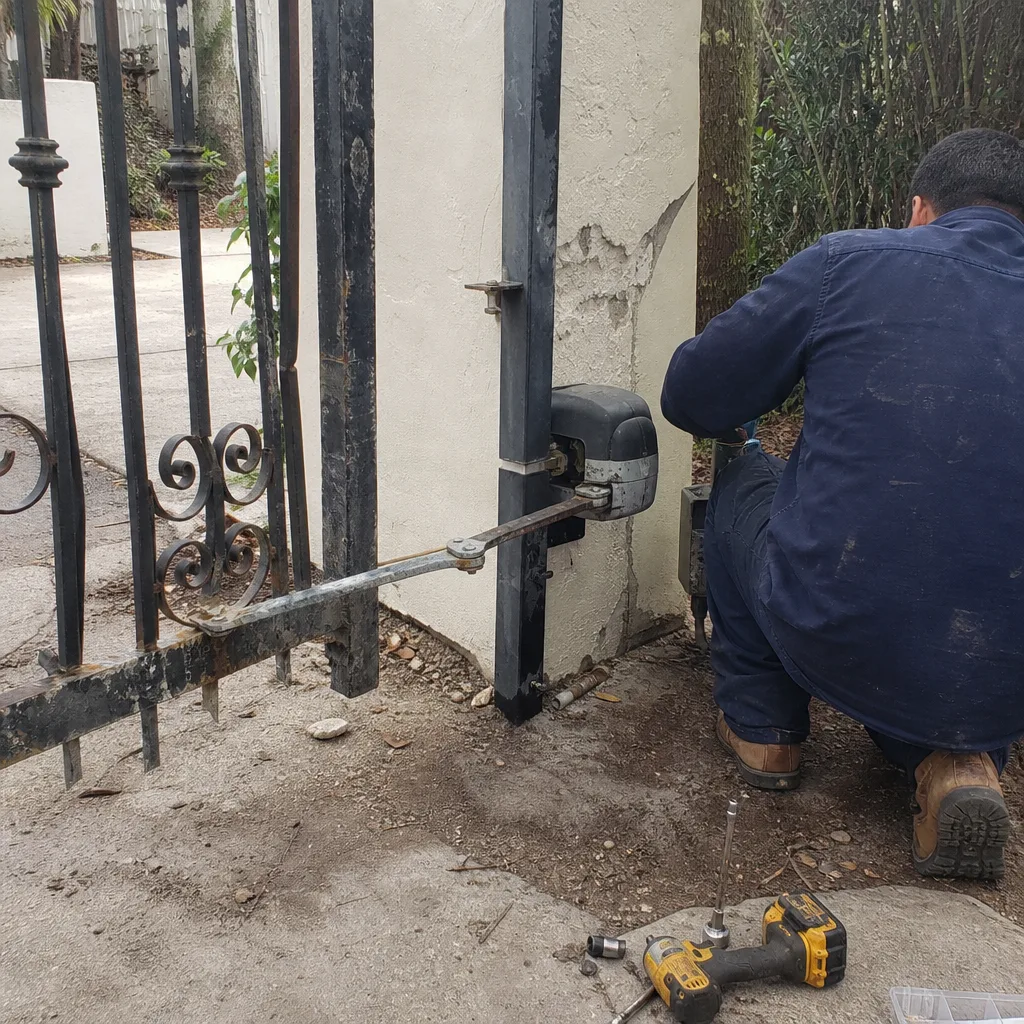 Before
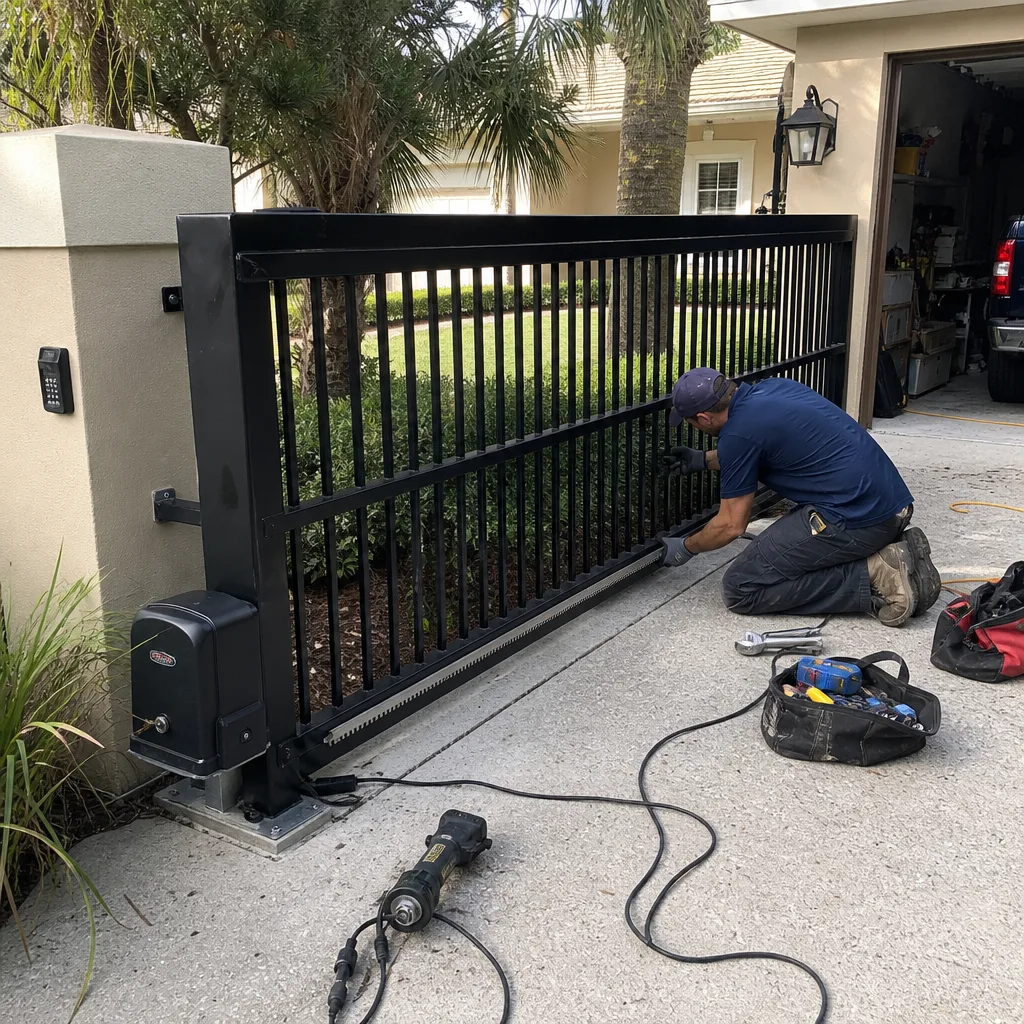 After
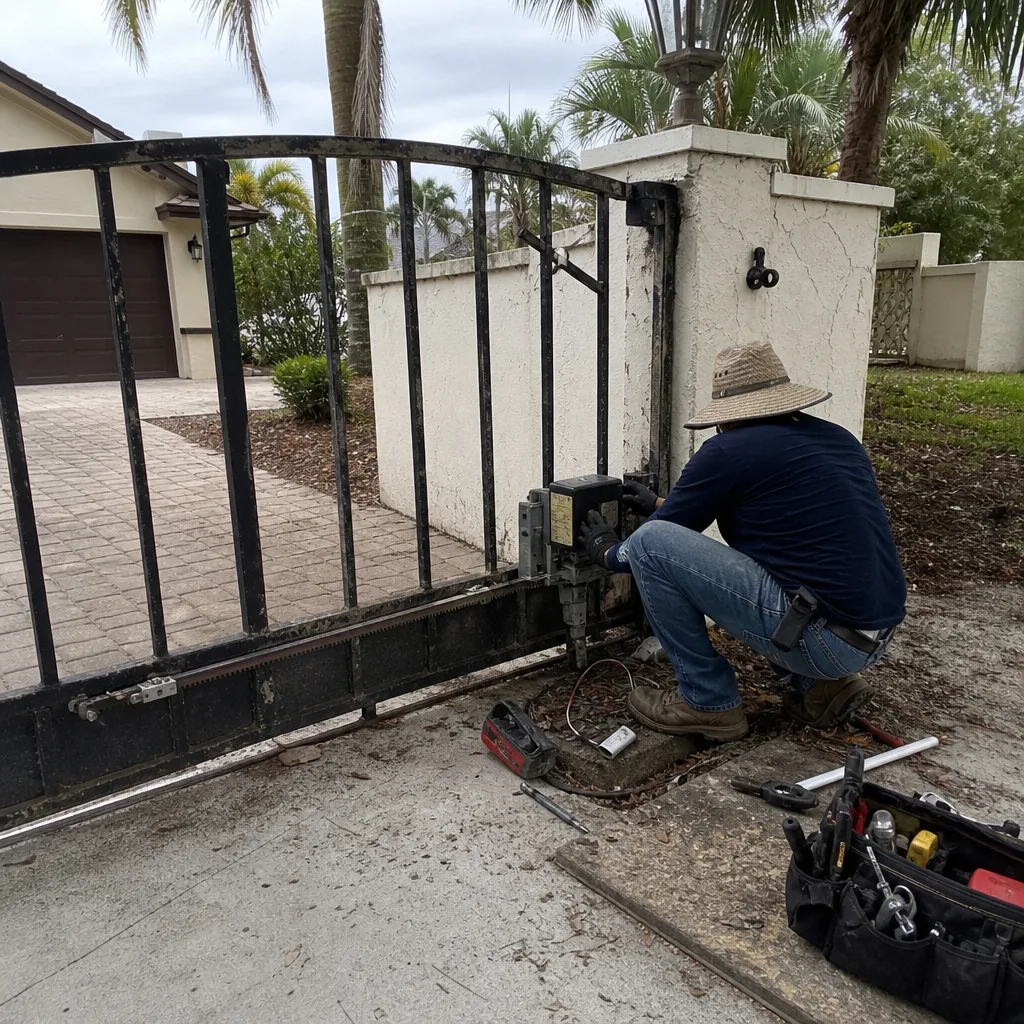 Before
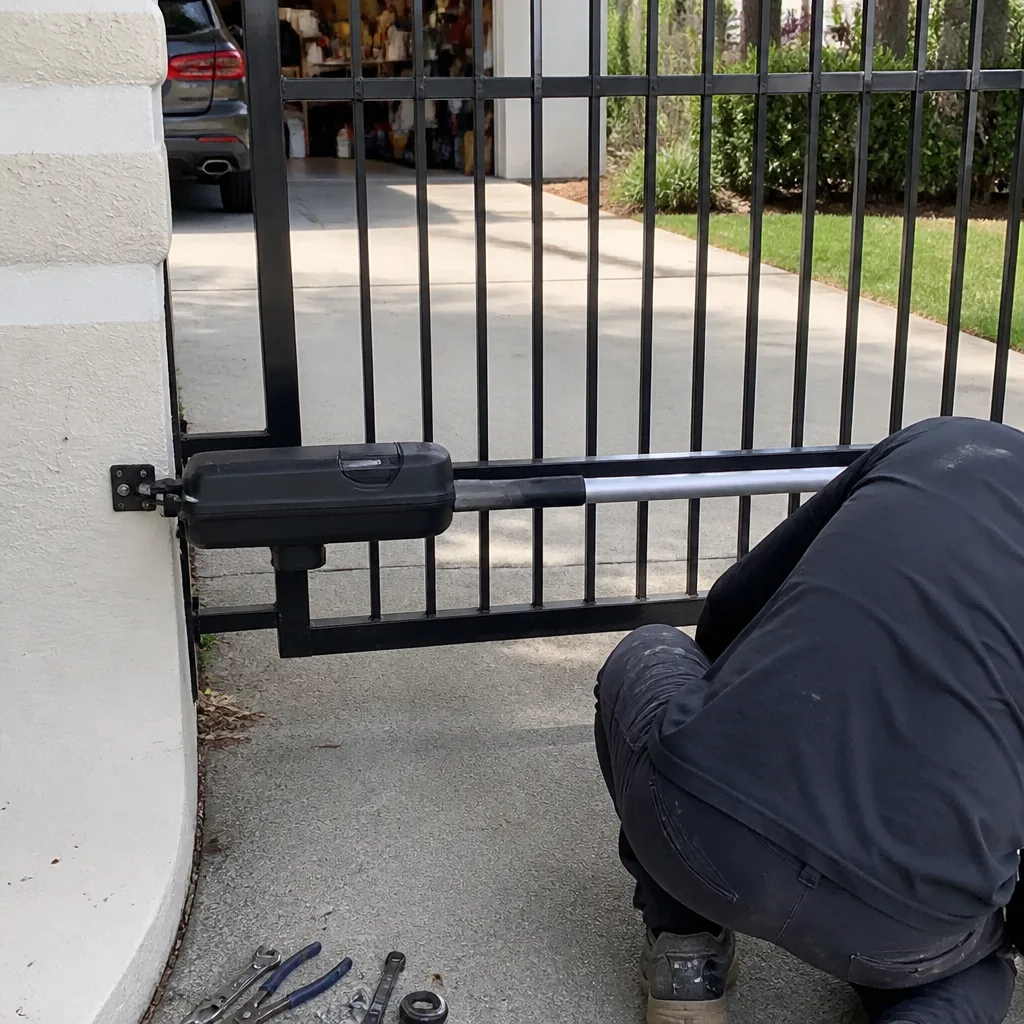 After
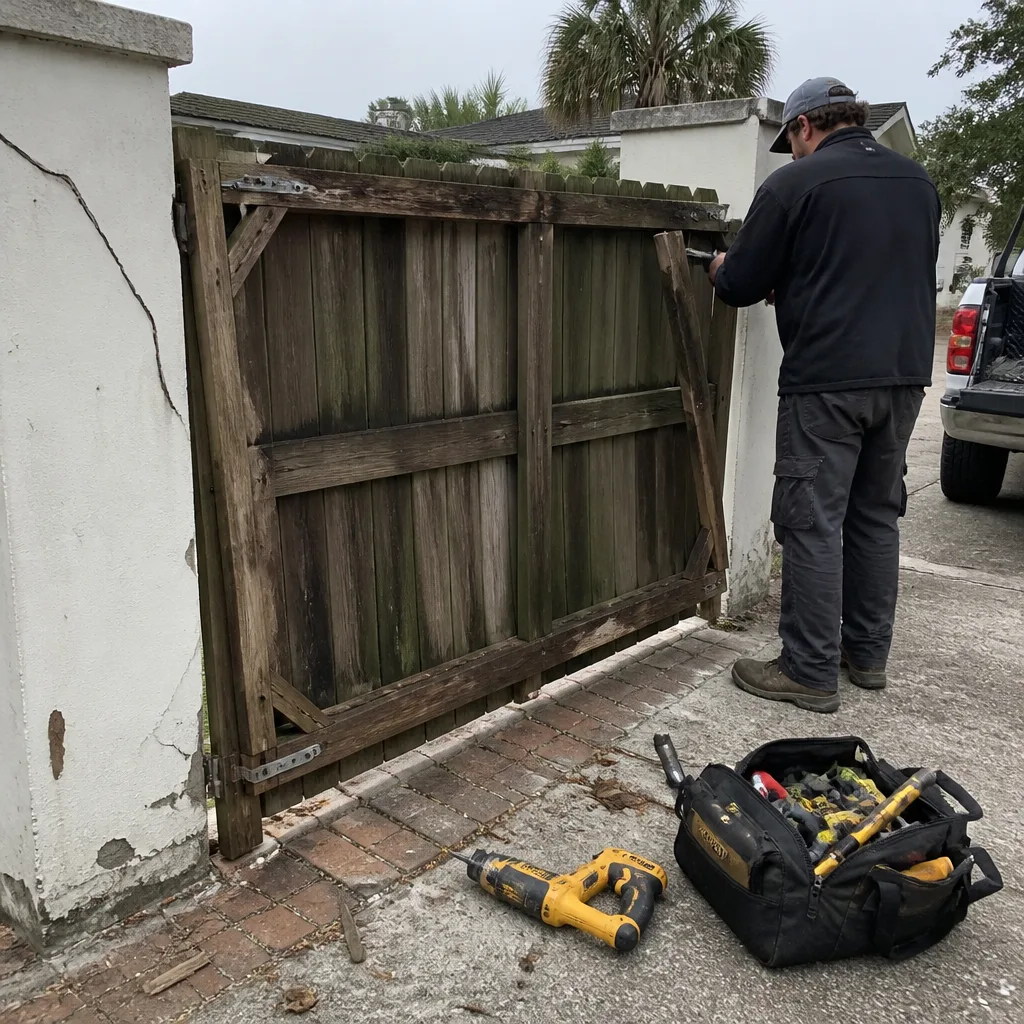 Before
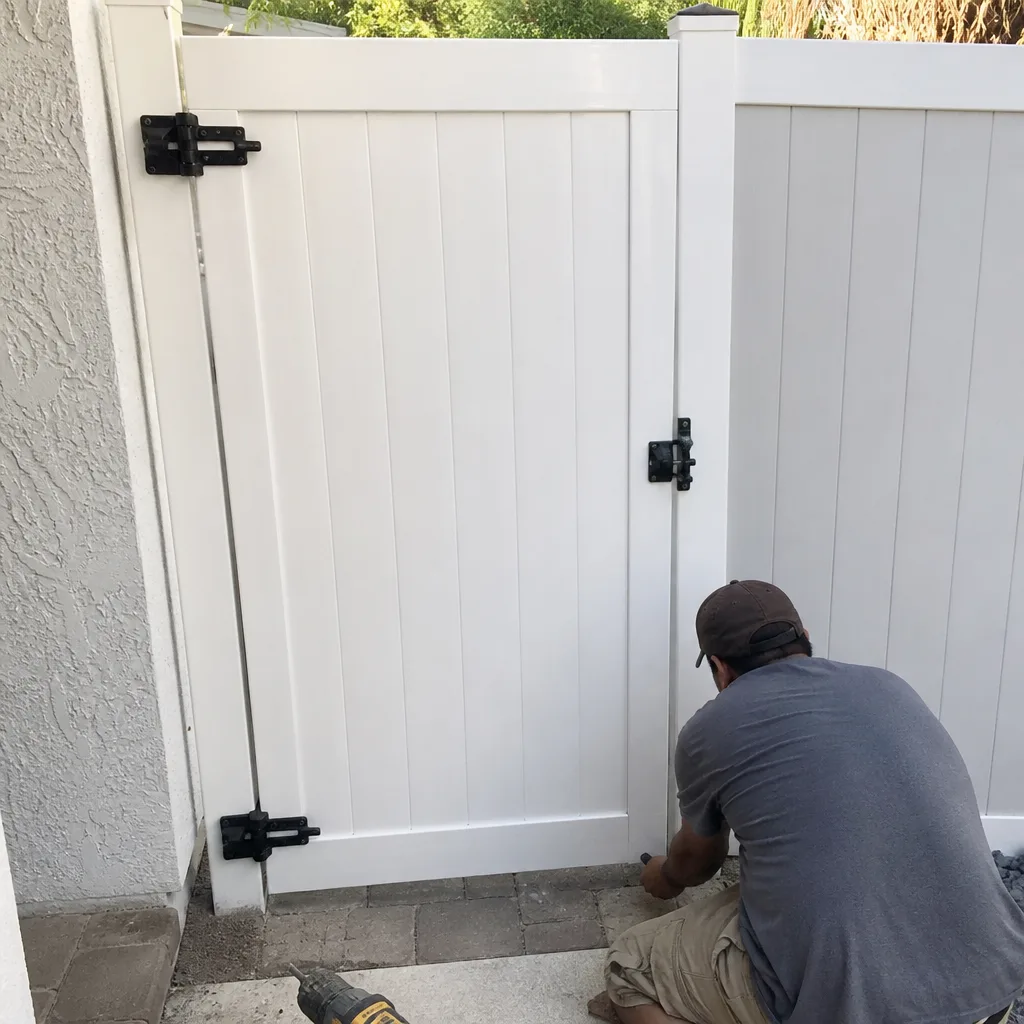 After