
Last updated October 30, 2026
 Wrought iron
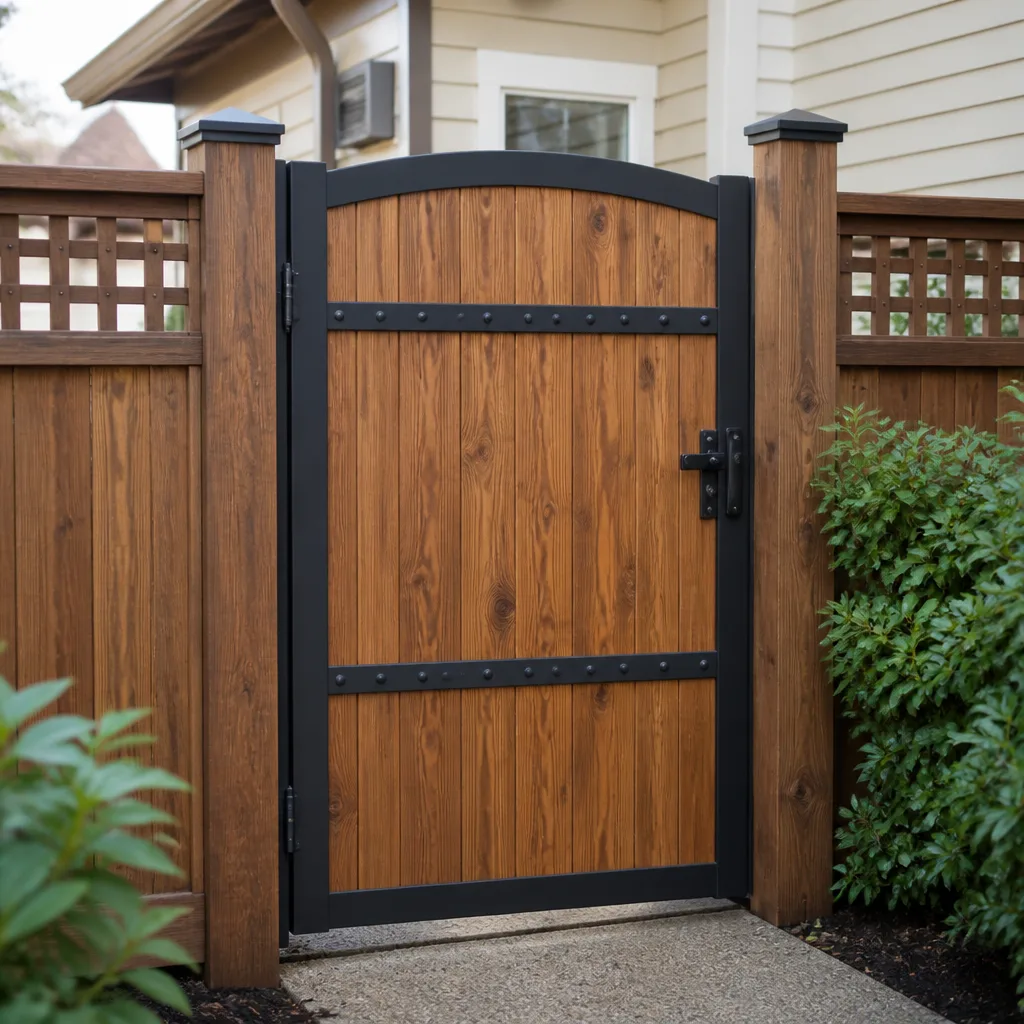 Wood & steel frame
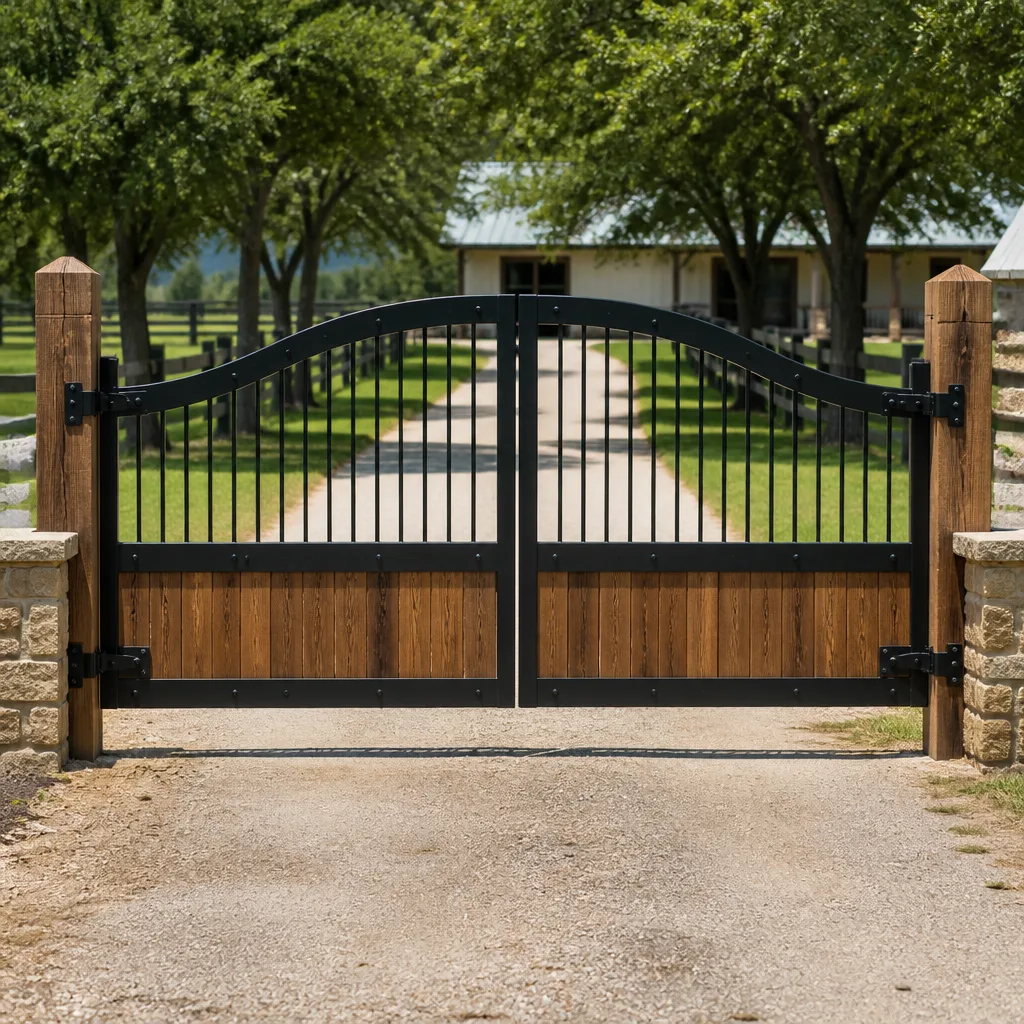 Farm & ranch
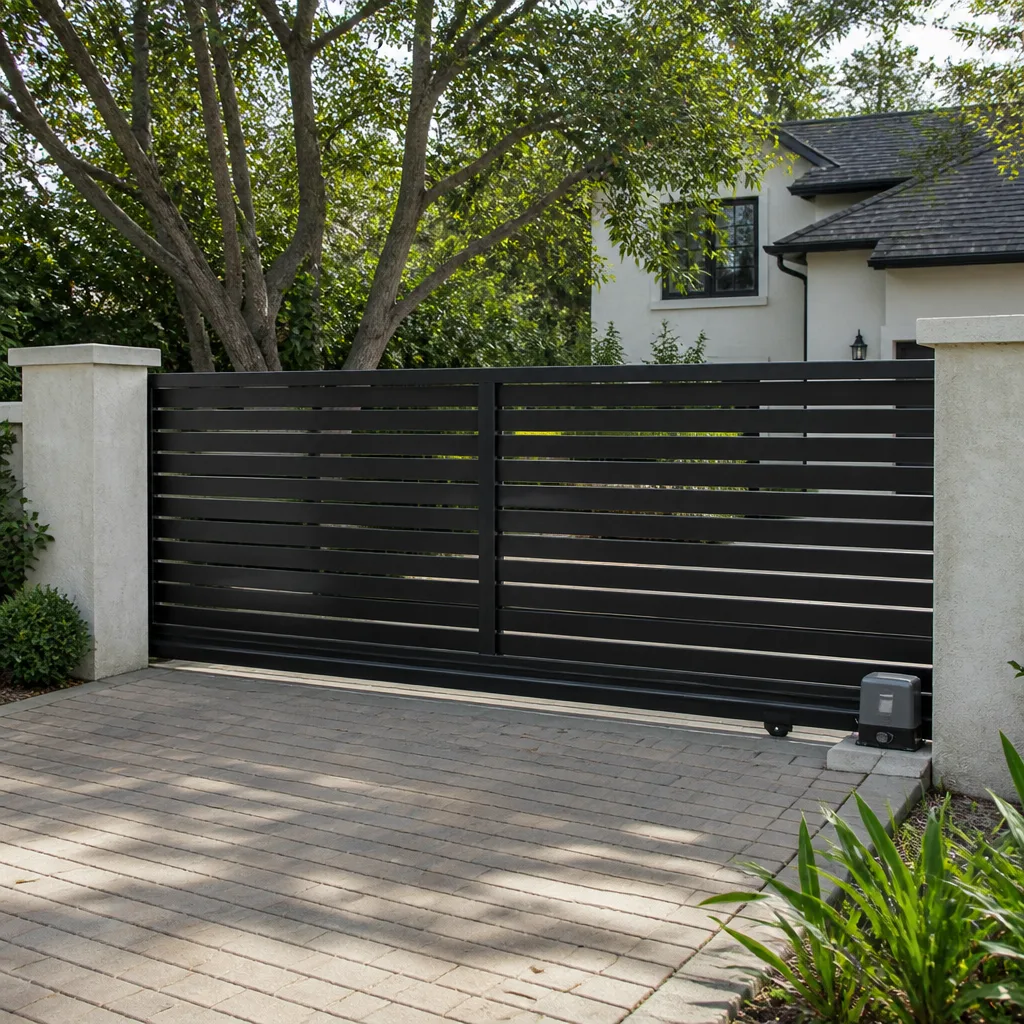 Sliding driveway gates
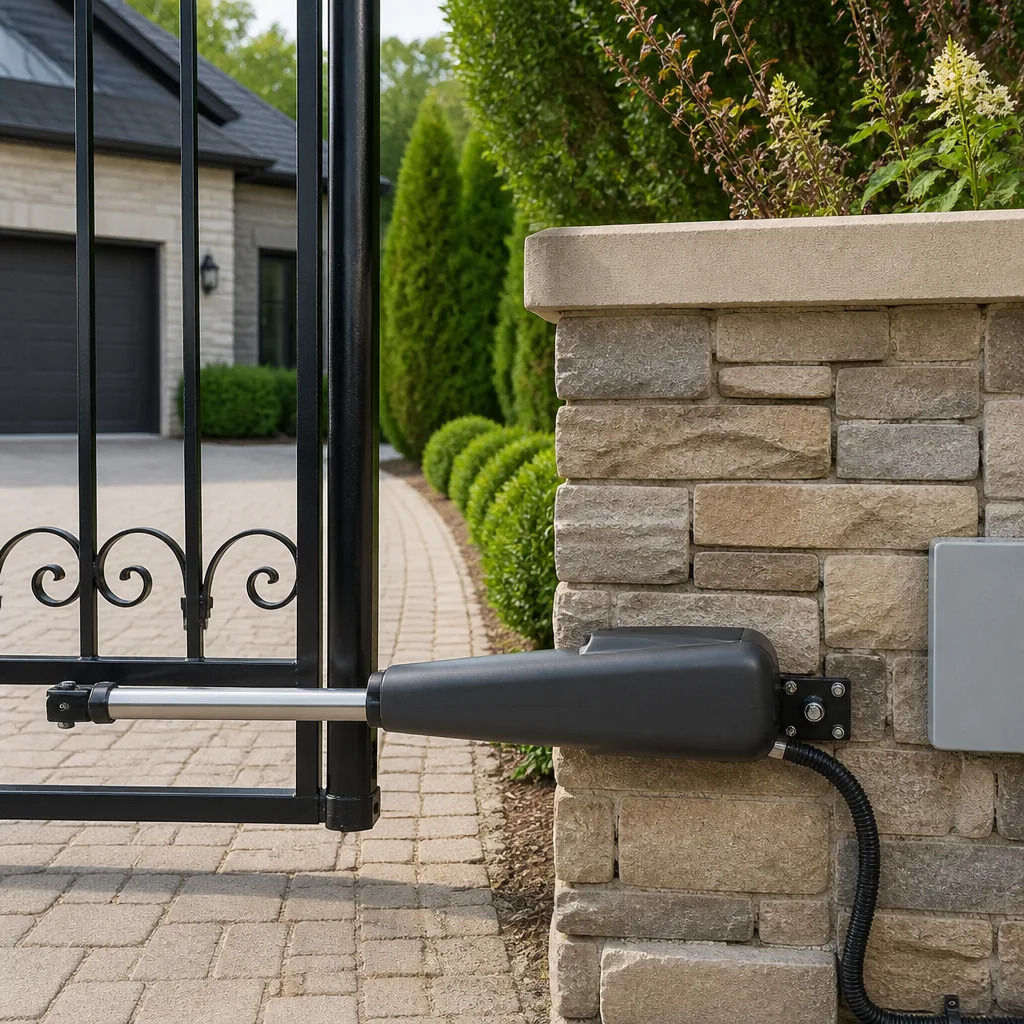 LiftMaster operators
Free on-site gate assessment - hinges, posts, and your LiftMaster or Nice gate operator checked before anything is quoted
The assessment is free and the quote is the invoice.
Get your free estimateSeasonal Gate Repair Care for Daytona Beach: Year-Round Homeowner’s Guide
The month most Daytona Beach gate operators fail isn’t July. It’s October. That’s when ten months of salt air, afternoon thunderstorms, and accumulated heat stress finally catch up to systems that seemed fine all summer. The failure looks sudden, but it rarely is. This guide will walk you through a Florida-honest maintenance calendar built around the two seasons that actually matter here: the Atlantic hurricane window and the dry recovery months that follow. You’ll learn what to check before June, what to do when the power drops during a storm, and which post-storm inspections catch failures before they strand you at the driveway. This is seasonal gate care written specifically for coastal Volusia County, not a generic four-season template that treats Daytona Beach like Ohio.
Styles & brands we work with
Quick Answer
Seasonal gate maintenance in Daytona Beach means two distinct routines: a pre-hurricane prep window from April through May focused on backup batteries, manual release mechanisms, and control board protection, and a dry-season service window from November through March when lubrication, rust treatment, and mechanical adjustments hold longest. Gate owners who follow this two-season calendar catch roughly 80% of the failures we see on our Gate Repair services calls before they leave a driveway gate stuck open or sealed shut.
Table of Contents
- Why Daytona Beach Climate Breaks Gates Differently
- Pre-Hurricane Season Prep: April and May
- Peak Storm Season Protocol: June Through September
- Post-Storm Inspection Priorities, Ranked by Failure Likelihood
- Dry Season Tasks: November Through March
- How to Program and Test Your Gate’s Battery Backup Before Storm Season
- Common Mistakes to Avoid
- When to Call a Professional
- Frequently Asked Questions
- The Bottom Line
Why Daytona Beach Climate Breaks Gates Differently
A gate in Daytona Beach weathers more in one year than a gate in central Florida does in three. The combination is the problem: salt aerosol off the Atlantic, afternoon humidity that averages above 75% from May through October, and intense UV that bakes powder coating off steel. Salt and moisture corrode hinge pins and actuator arms. Heat swells control board capacitors. And the daily thermal cycling, hot afternoons followed by relatively cool overnight lows, creates condensation inside operator housings. We open operator boxes in Daytona Beach and find rust on terminal connections that were installed dry two seasons earlier. That’s not a defect. That’s the environment doing what it does.
This is why seasonal gate repair care in Daytona Beach isn’t optional upsell advice, as explained in The Complete Gate Repair Guide for Daytona Beach Homeowners. It’s the difference between a fourteen-year gate system and one that dies at year six. The good news: the maintenance calendar here is simpler than people think. You’re not following spring, summer, fall, and winter. You’re prepping before hurricane season, managing through it, and servicing during the dry months when chemical treatments actually cure properly. If you own a Mighty Mule, LiftMaster, Elite, or FAAC operator, the principles are the same, though the specifics vary by model. The calendar below applies to every automated swing and slide gate on a Volusia County property.
Pre-Hurricane Season Prep: April and May
The Atlantic hurricane season officially opens June 1st. That means April and May are your prep window, and the work splits into five categories. None of these tasks requires a technician, though a professional check adds depth if you have an older system or a commercial-grade FAAC or Elite operator.
- Test the manual release mechanism. Every automated gate has a way to disengage the operator so the gate swings freely by hand. On swing gates, it’s usually a release lever or keyed lock on the operator arm. On slide gates, look for a disconnect handle on the gearbox. If you can’t find it, you need to know where it is before you need it. The manual release is the one feature that turns a broken gate from a stranded-vehicle emergency into an inconvenience.
- Check backup battery condition. Open the operator housing and look at the battery. Corrosion on the terminals, a swollen case, or a date code older than three to four years means the battery won’t hold charge when utility power drops. We’ll cover programming and testing in detail below, but visually confirming battery health is step one.
- Seal the control board housing. Moisture kills more control boards in coastal Volusia County than lightning does. Check the gasket seal on the operator enclosure. If the gasket is cracked, compressed, or missing sections, water gets in during the first afternoon squall and the board shorts. A tube of silicone gasket maker is a $12 fix that prevents a $400 to $900 board replacement.
- Clear the gate track and hinge zones of debris. Slide gate tracks collect sand, palm fronds, and pine needles. Swing gate hinge posts collect everything. Debris loads wear motors faster and create misalignment that leads to premature limit switch failures. Clear both sides of the track, both hinge posts, and the area within three feet of the gate’s full travel arc.
- Run a full cycle test while watching the gate. Open and close the gate three times. Watch for hesitation, jerky movement, unusual noise, or sagging at the far end. A gate that moves smoothly in May has a much better chance of surviving a summer of daily use plus two or three severe storm cycles than one that’s already struggling. If you see anything odd, that’s the time to call a dedicated gate repair specialist. For our part, Regent Gate Repair home runs pre-storm checks across Daytona Beach every spring.
Peak Storm Season Protocol: June Through September
Storm season in Daytona Beach is not a passive period for gate owners. It’s a period of active management, and the most important skill to have is knowing how to operate your gate manually without damaging the operator’s drive system. This matters because the single most common post-storm repair we see is a burned-out capacitor or stripped gear set caused by someone forcing a gate open while the operator was still engaged.
How to safely open an automated gate during a power outage:
- Locate the manual release before you need it. This is why April prep matters. On most residential swing operators like Mighty Mule or Ghost Controls models, the release is a pull handle or small lever directly on the operator arm. On slide operators like LiftMaster or DoorKing, there’s typically a disconnect lever on the drive unit or a chain-release mechanism.
- Disengage the operator completely. You should hear or feel a distinct click or clunk when the drive disengages.
- Move the gate by hand slowly. A properly disengaged gate should move with moderate resistance but no grinding. If it doesn’t move, the problem is mechanical, not electrical. Stop. Forcing a mechanically bound gate will bend the operator arm or strip the gear.
- Leave the gate in the open or closed position that serves your property best. If you’re sheltering and want vehicle access, leave it open. If security matters more and you have another exit, close it. Prop it or latch it in place if the operator won’t hold it.
- Re-engage the operator only after power is restored and the control board has booted. This prevents the board from trying to run the motor against a mispositioned gate, which can destroy limit switches.
During named-storm watches, we recommend one more thing for Daytona Beach residents: physically secure the gate in place with a chain or heavy-duty strap. This isn’t because the wind will blow the gate open. It’s because wind gusts flex a gate leaf repeatedly against its stops, and that flexing damages hinge welds, cracks powder coating, and loosens operator mounting bolts. A secured gate is a protected gate.
Homeowners with electric gate systems who live near the Halifax River or on the beachside peninsula should also know that storm surge and saltwater flooding affect electronics long after the water recedes. If your operator housing sat in salt water, even briefly, do not power the system back on. Salt water conducts electricity and corrodes boards at a rate that will short the entire system. Call a qualified technician. Our team at Regent Gate Repair has pulled enough flood-damaged boards out of operators around electric gate repair in Flagler Beach and Daytona to know that flood recovery starts with a board-level inspection, not a power-on test.
Post-Storm Inspection Priorities, Ranked by Failure Likelihood
After any direct or near-miss storm event, most owners check whether the gate opens. That’s the right first question, but it’s the wrong way to inspect. Failures take time to show themselves. Here is the order we follow on post-storm service calls across Daytona Beach, based on what actually fails first:
- Control board and wiring connections. This is number one for a reason. Storm-driven moisture gets inside enclosures and sits on PCBs. The gate may work for two weeks, then fail without warning when corrosion finally bridges a trace. Open the enclosure, look for moisture or crusty green deposits on terminals, and dry everything thoroughly before testing power.
- Battery and charger function. A storm that knocks out power also drains your backup battery. If the charger has been trying to recover a deeply discharged battery, it may overheat or fail. Check for heat, swelling, or a charger that stays hot to the touch after power is restored.
- Loop detectors and safety sensors. Lightning strikes and flooded conduits take out loop detectors regularly. A gate that won’t open automatically when a car approaches, or that reverses unexpectedly, is usually showing loop or photo-eye damage. These are safety components. Don’t bypass them. Test them and replace if needed.
- Limit switches and travel stops. High winds push gate leaves against their physical travel limits. On a swing gate, that force transfers into the operating arm and eventually the limit switch. If your gate now overtravels or stops short, the limits likely shifted.
- Hinges, welds, and mounting brackets. These fail last in order because they fail slowly. A stressed weld takes weeks to crack through. Check for hairline cracks at hinge welds, loose bolts on the operator mount, and any new sag at the far end of the gate leaf.
If any two or more of these items show damage, call a professional rather than replacing parts piecemeal. Storm damage tends to cascade. The board that got wet may have damaged the transformer. The limit switch that shifted may have worn the capacitor. A specialist who understands the whole system, from the control board to the hinge, will diagnose the full scope, as covered in Choosing the Right Gate Repair Brand: A Buyer’s Guide for Daytona Beach. The temptation to fix one thing at a time usually costs more in the long run.
Dry Season Tasks: November Through March
Daytona Beach’s dry season is the most productive maintenance window of the year, and most owners completely miss it. From November through March, relative humidity drops below the summer averages, and that matters for one reason: chemical treatments cure properly. Rust converter, cold galvanizing spray, penetrating oil, and lithium grease all perform best when they can dry without moisture interrupting the process. You apply the same product in July and it sits wet for weeks, trapping moisture against the metal instead of protecting it.
Here’s the dry-season checklist we recommend for Daytona Beach gate owners:
- Lubricate hinge pins and operating arms. Use a dry-film lubricant or white lithium grease on hinge points. Avoid WD-40 as a long-term solution, it’s a cleaner, not a lubricant. Apply, let it penetrate, and wipe off excess so the beachside sand doesn’t stick to it.
- Treat surface rust on the gate frame and operator housing. Knock off loose scale with a wire brush, apply rust converter, then hit the spot with cold galvanizing spray or matching paint. This is a three-step process, and the dry season is the only time all three steps cure properly in coastal air.
- Inspect and tighten all mounting hardware. Temperature swings cause expansion and contraction. Bolts loosen over the course of a summer. Go through the operator mount, hinge bolts, and gate leaf brackets with a socket wrench and torque them to spec.
- Check and clean the gate track (slide gates). Remove sand and organic debris from the track channel, then inspect the rollers. Flat-spotted rollers cause the gate to bind and strain the motor. Replace them while the weather is cooperative.
- Test the auto-reverse and safety photo eyes. Dry season is the right time to verify every safety feature works. Place an object in the gate’s path and confirm it reverses. Block one photo eye and confirm the system refuses to close. If either test fails, the problem is a sensor, not a seasonal quirk.
- Review the operator’s onboard diagnostics. Most modern operators from LiftMaster, FAAC, Elite, and Mighty Mule store error codes. Pull the code history and cross-reference it against the manual. A single over-current event might be a fluke. Three in a month is a failing capacitor.
For owners in Daytona Beach whose gates sit within a block of the ocean, we recommend doing this dry-season checklist twice: once in November and once again in February. Salt deposition is constant, and the second pass gives you a fresh layer of protection before the humidity returns in April. Homeowners who bought in this market and need a full mechanical evaluation can start with the basics above, or consult a professional.
How to Program and Test Your Gate’s Battery Backup Before Storm Season
Here’s an uncomfortable truth: most Daytona Beach homeowners with gate battery backup systems have never tested them. The batteries sit in the housing, connected or not, and the owner discovers the system was never configured only when utility power drops during a storm and the gate won’t respond. This is a preventable failure, and the test takes about twenty minutes.
Start by confirming whether your operator even has a battery connected. On residential swing operators like Mighty Mule and Ghost Controls, backup batteries are often sold as an accessory. If you didn’t order one or the installer didn’t add one, no battery exists. On commercial-grade systems like FAAC, BFT, and DoorKing, battery backup is more commonly integrated. If you’re not sure what’s inside the housing, open it and look. Two thick-gauge wires leading to a sealed lead-acid or lithium battery block means you have backup. No second set of battery wires means you don’t.
Programming steps for a typical battery-ready operator:
- Read the manual for your specific model. This matters more than any generic advice can. Power down the operator completely using the system’s power switch, not just the breaker.
- Connect the backup battery according to the two-wire polarity guide in the manual. Red to positive, black to negative. Reversed polarity fries the charge controller immediately.
- Power the system back on and navigate to the installer settings menu. Look for “Battery” or “Auxiliary Power” in the configuration options.
- Enable battery backup mode and set the behavior you want during an outage. Options typically include: full automatic operation on battery, open-only, or hold-position. Full operation is fine for most residential gates. Commercial settings with high traffic may prefer hold-position to preserve battery charge.
- Test by switching off the breaker that feeds the operator, then operate the gate through two full open/close cycles on battery.
- Switch the breaker back on and confirm the charger resumes. Most chargers show a green LED or the control panel indicates normal charging voltage.
If your battery fails to hold a charge or the gate moves sluggishly on battery power, replace the battery. Most gate backup batteries last three to five years in Daytona Beach heat. A battery that tests weak in May will be dead by August when the first serious storm hits. We see this pattern every year, and it’s the number one reason automated gates fail during hurricane season when owners need them most.
Common Mistakes to Avoid
- Forcing the gate open during a power outage without disengaging the operator first. This is the single most common cause of stripped gears and bent actuator arms we see in Daytona Beach after storms. The manual release exists specifically for this. Find it, use it, then move the gate.
- Applying rust treatment during the humid season. Rust converter and cold galvanizing sprays applied in July trap moisture and accelerate corrosion. Wait for the dry months from November through March when the chemistry actually works.
- Testing the backup battery by unplugging the system mid-cycle. Always power down cleanly, then test. Abrupt voltage drops during a cycle can damage the control board’s memory and leave the system stuck in a fault state.
- Ignoring a gate that hesitates or stutters. Intermittent operation is the earliest warning sign of capacitor degradation, motor wear, or a developing short. By the time the gate stops entirely, the failure has usually taken out multiple components.
- Bypassing safety sensors instead of replacing them. A misaligned or dirty photo eye is annoying, and the temptation to disable it is real. But a gate without working auto-reverse sensors is a serious injury liability, and kids, pets, and delivery drivers are all in the danger zone. Fix the sensor.
- Lubricating the gate track with heavy grease. Grease attracts sand, and Daytona Beach has an endless supply of sand. Use a dry-film lubricant on tracks and rollers. Heavy grease turns into grinding paste within weeks.
- Waiting for the gate to fail before looking for a repair professional. Most owners find themselves under pressure after a failure: they need the gate fixed now, they call whoever answers, and they accept whatever quote comes. Building a relationship with a gate specialist before you need one gives you a calmer, cheaper repair process when the inevitable breakdown arrives.
When to Call a Professional
Some gate care fits a weekend checklist. Some doesn’t. Call a dedicated gate repair specialist when you find any of the following: water or corrosion inside the control board housing, a backup battery that won’t hold charge after a full charge cycle, error codes you can’t cross-reference, a gate that reverses mid-cycle without an obstruction, any visible crack in a hinge weld or operator mount, or floodwater exposure of any depth. These conditions rarely resolve on their own, and continuing to run the gate makes the eventual repair more expensive. See more guides & resources for additional maintenance tips. If you’re in the Daytona Beach area and you’re seeing any of these warning signs, Regent Gate Repair offers free estimates, call (855) 927-1091. We work on LiftMaster, FAAC, Mighty Mule, Elite, and other major brands, and we’ll tell you honestly whether the system is worth repairing or if you’re better served by a new installation.
Frequently Asked Questions
A full seasonal maintenance check twice a year is right for most Daytona Beach properties: once in April or May before hurricane season, and once in November or December when the dry season begins. Homes within a quarter mile of the ocean should add a third mid-summer check because salt deposition at that distance is constant and aggressive. Call (855) 927-1091 if you’d rather have a professional handle the inspection, estimates are free.
In priority order: secure the gate with a chain or strap, test that you can find and operate the manual release, confirm the backup battery holds a charge, seal any gaps in the operator housing gasket, and clear the gate’s travel path of debris. If you can’t complete any of these, call a specialist before the storm approaches, calls stack up fast in the forty-eight hours before landfall.
Yes, every automated gate system includes a manual release mechanism that disengages the operator drive so the gate can be moved by hand. The release location varies: swing arms typically have a release lever on the operator itself, while slide gates usually have a disconnect handle near the drive unit. If you don’t know where yours is, find it now, not during an outage when you’re working in the dark.
October failures in Daytona Beach are almost always cumulative damage finally crossing a threshold: heat-stressed capacitors, moisture-corroded board traces, and sand-worn mechanical parts that degraded gradually all summer. The system worked because the damage hadn’t yet breached a failure point. October is when it does. This is why fall maintenance matters as much as spring.
Repair costs range widely depending on the failure: a limit switch replacement typically runs $120 to $250, a capacitor replacement $90 to $180, a full control board replacement $350 to $900, and a backup battery replacement $80 to $200. Labor adds $75 to $150 per hour, and prices rise during post-storm surge demand periods. For an exact quote on your specific system, call (855) 927-1091, estimates are free and quoted before any work starts.
Yes, we service commercial access-control systems from FAAC, BFT, DoorKing, Elite, and LiftMaster across Volusia County, including apartment complexes, HOAs, and commercial lots. The diagnostic process is the same: a full system evaluation before recommending repair or replacement, with everything quoted upfront. If you manage a property with an automated gate, gate repair in Flagler Beach and Daytona Beach is within our regular service area.
The Bottom Line
Daytona Beach gate care isn’t a four-season routine. It’s a two-season system built around the Atlantic hurricane window and the dry recovery months that follow. Prepare in April and May by testing your manual release, battery backup, and board seals. Manage actively from June through September, knowing how to open your gate safely during outages without damaging the drive. Then use the dry months from November through March to lubricate, treat rust, and tighten hardware when the chemistry actually cures. This pattern catches the failures before they leave you stranded, extends the life of your operator by years, and turns gate maintenance from a reactive scramble into a predictable routine. If you’re not sure where your system stands, Regent Gate Repair handles both residential and commercial systems, from the control board to the hinge, and we cover gate installation in Flagler Beach and Daytona Beach when repair no longer makes sense. Call (855) 927-1091 for a free estimate.
Written by the team at Regent Gate Repair, serving Daytona Beach since 2013.
See the difference
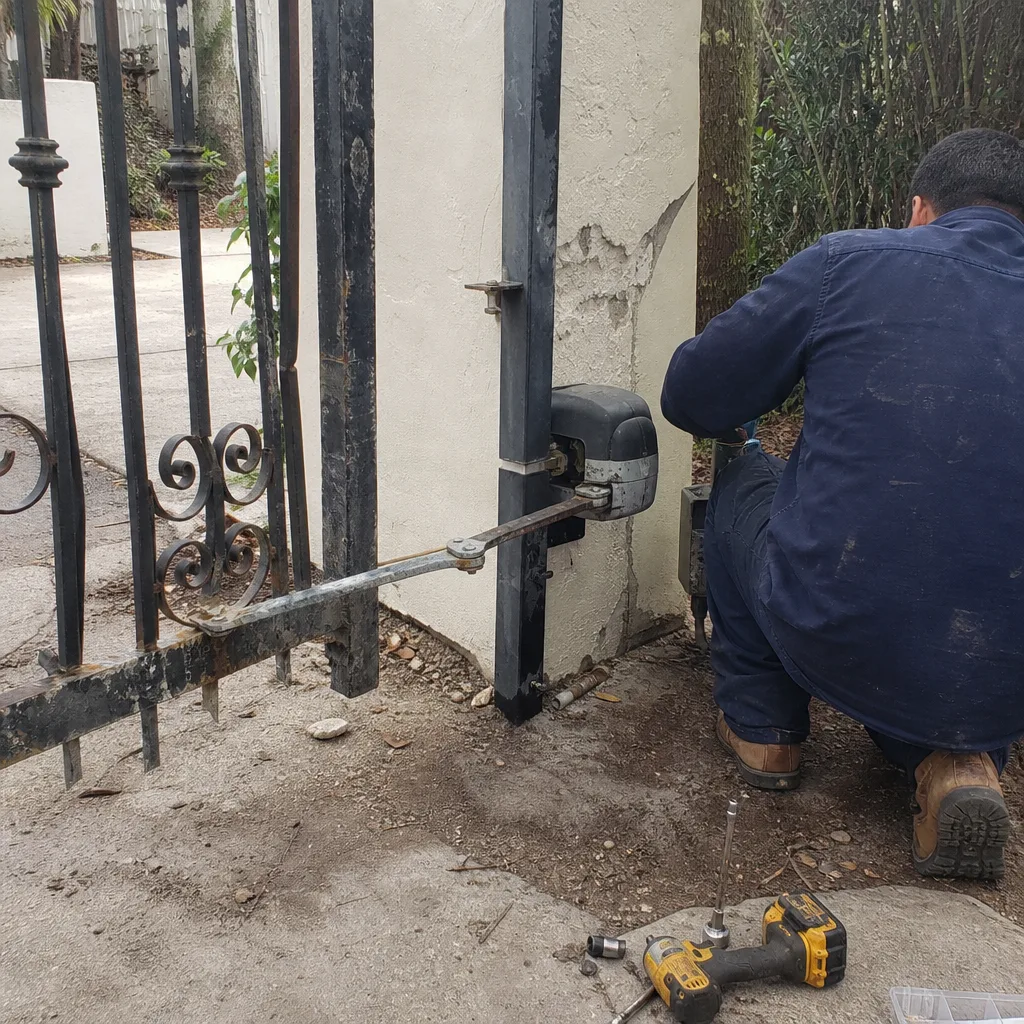 Before
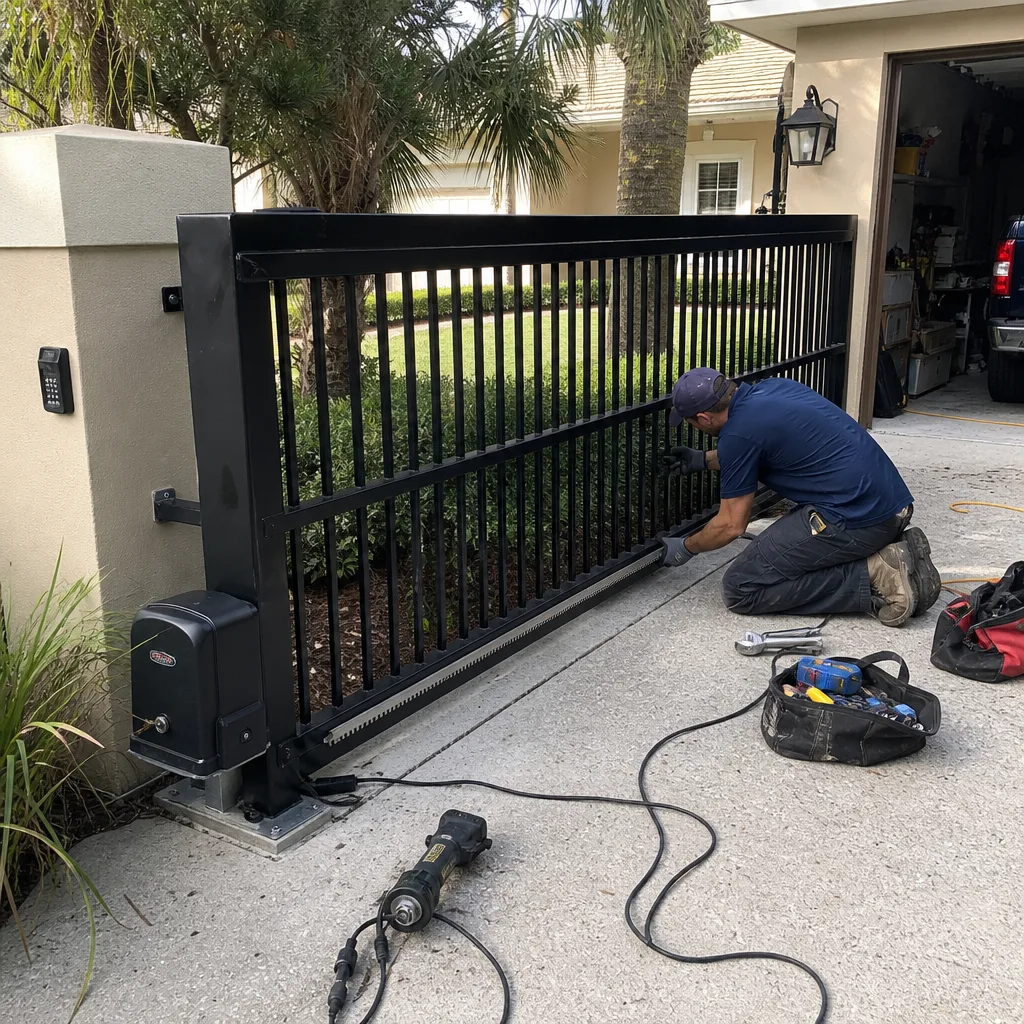 After
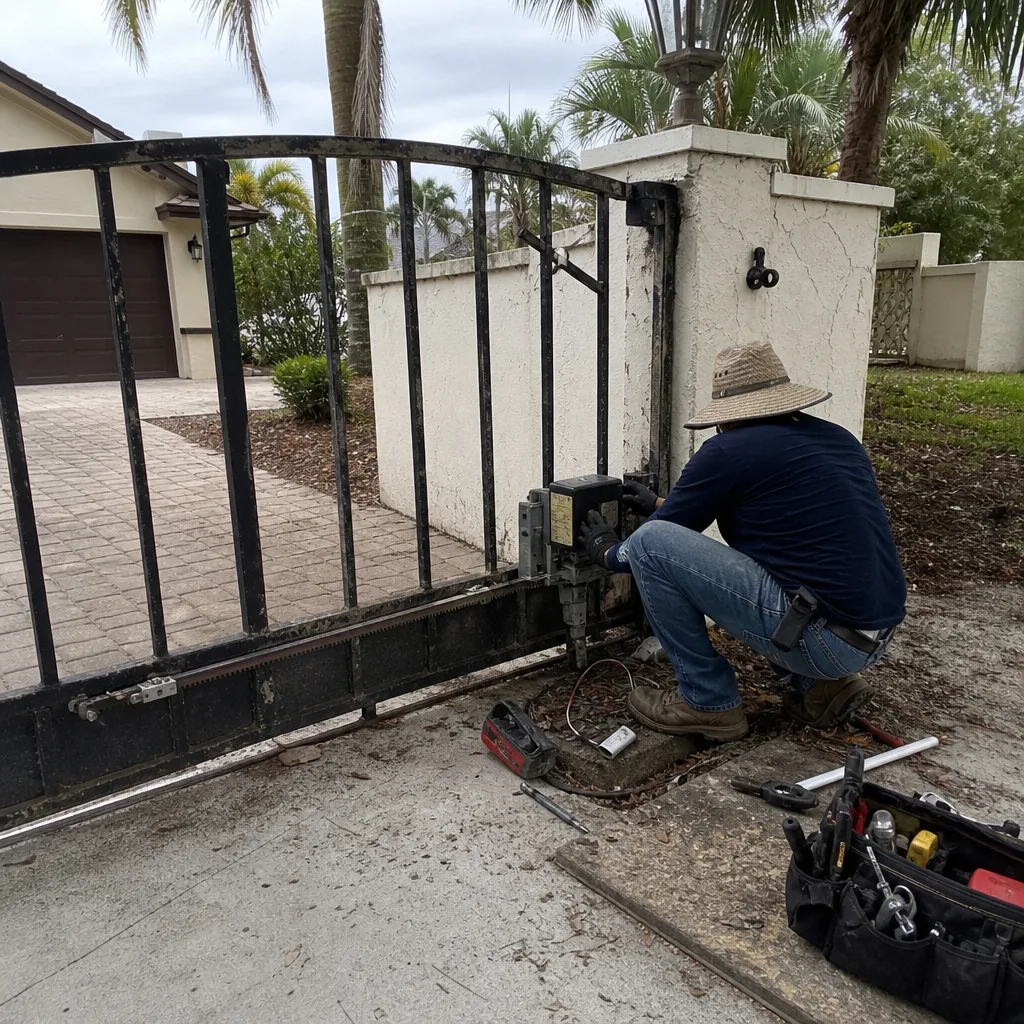 Before
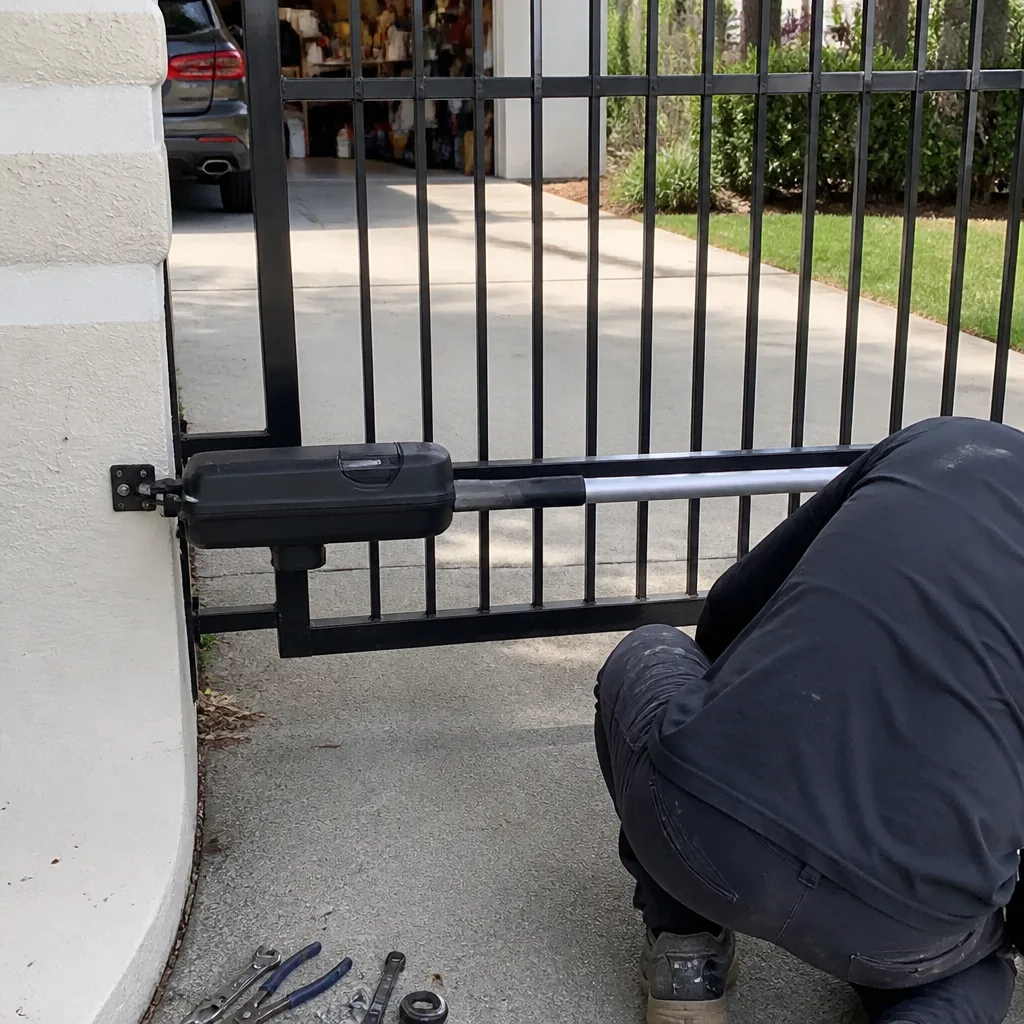 After
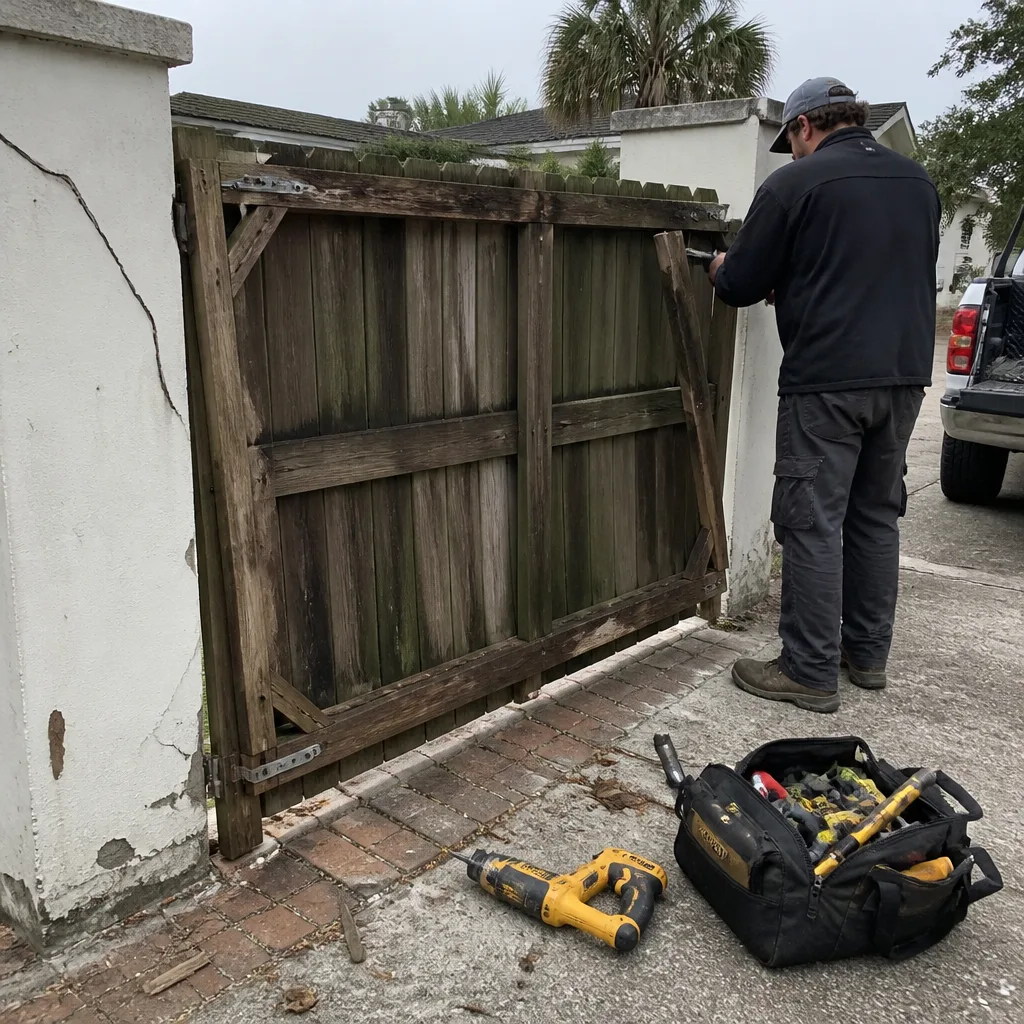 Before
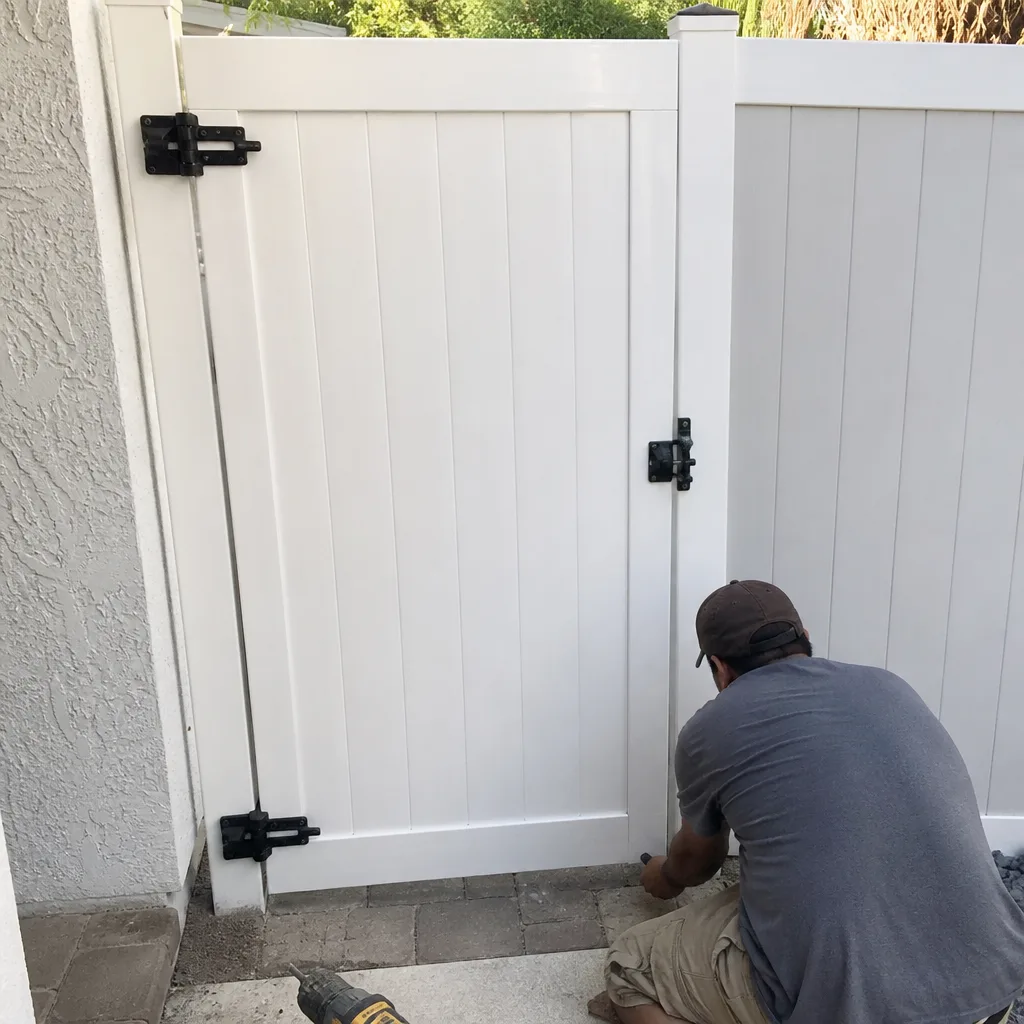 After